
Propagation
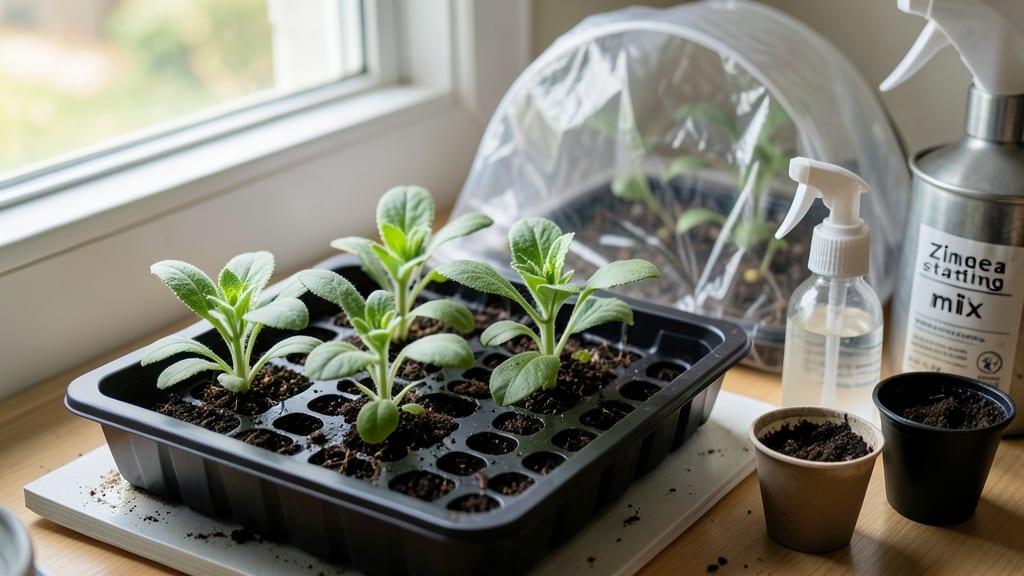
Starting zinnias from seed indoors gives you a head start on bold, long-lasting blooms—and the secret to fast germination is all about warmth and moisture. 🌱 I’ve grown hundreds of zinnias, and these cheerful flowers reward early starts with nonstop color from summer until frost.
The trick isn’t complicated: it’s about creating the perfect cozy environment for those tiny seeds to wake up quickly. You’ll need just a few supplies: seed-starting mix, small pots or a tray, a heat mat (or sunny windowsill), and patience for about 10-14 days until those first green leaves appear.
The key is keeping the soil consistently warm (around 70°F) and damp but not soggy—zinnias hate cold, wet soil that leads to damping off. A spray bottle makes this easy without overwatering.
Once they sprout, you’ll see sturdy seedlings in no time, ready to transplant outdoors after the last frost. The payoff? A garden bursting with zinnias that attract butterflies and last all season. No leggy, weak plants here—just compact, vibrant blooms that make neighbors stop and stare.
This method works for any zinnia variety, from dwarf ‘Thumbelina’ to towering ‘Benary’s Giant.’ Just give them bright light and consistent care, and you’ll have a showstopping display that keeps giving all summer long.
📚 In This Guide
- What you need
- Instructions
- Tips and common mistakes
- Wrapping up and next steps
What you need
- ● Zinnia seeds: Choose heirloom or hybrid varieties (e.g., 'Benary’s Giant,' 'Profusion'). Aim for 20-50 seeds depending on your growing space.
- ● Seed-starting trays: 1-2 biodegradable or plastic cell trays (72-128 cell count) or a 6-inch shallow container with drainage.
- ● Seed-starting mix: 1-2 cups of a sterile, well-draining mix (e.g., 50% peat moss, 30% perlite, 20% vermiculite). Avoid garden soil—it’s too dense!
- ● Grow lights or sunny windowsill: A full-spectrum LED grow light (12-16 hours/day) or a south-facing window (6+ hours of direct light).
- ● Spray bottle: For gentle watering (avoid over-saturating seeds!).
- ● Plastic wrap or humidity dome: To create a mini greenhouse and retain moisture.
- ○ Heating mat (optional but helpful): A seedling heat mat (70-75°F) to speed up germination (especially in cooler climates).
- ● Patience: Zinnias germinate in 7-14 days—stay consistent with care!
- ● Warmth: Ideal soil temp for germination: 70-75°F (use a heat mat if needed).
- ● Space: Seedlings need 12+ inches of vertical space to mature indoors before transplanting.
- ● Dedication: Thin seedlings to 1 plant per cell (or 2 inches apart in containers) to prevent crowding.
Step-by-Step instructions for growing zinnias from seed indoors
Here's how to get those bold zinnias blooming fast—no waiting months for outdoor planting.
🌱 Step 1: Prep Seeds for Faster Germination
Zinnia seeds have a hard outer shell that slows germination. I soak them in warm water for 12 hours to soften the coating—this trick cuts germination time from weeks to days. Use a small bowl and cover the seeds with water, letting them sit at room temperature. You'll see them plump up slightly when ready.
After soaking, drain the water and let the seeds air-dry on a paper towel for 30 minutes. This prevents mold while keeping the shell softened. I like to do this step the night before planting so everything's ready to go in the morning.
🪴 Step 2: Fill Containers with Warm, Moist Seed Mix
Fill your seed-starting trays with the sterile seed mix (never garden soil—it's too dense and can harbor fungus). Press it down lightly so it's firm but not compacted. The goal is to create a cozy, airy environment where roots can spread easily.
Moisten the mix with warm water until it's damp but not soggy. You'll know it's right when a handful clumps together but doesn't drip. I tap the tray gently on the table to settle the soil evenly—this prevents air pockets that can delay germination.
💧 Step 3: Plant Seeds Shallow and Keep Warm
Plant the soaked zinnias ¼ inch deep—any deeper and they'll struggle to push through. I use a toothpick to make small holes, then drop in 2-3 seeds per cell (you'll thin later). Cover lightly with a sprinkle of additional mix, just enough to hide the seeds.
Place the tray in a warm spot (70-75°F). I use a seedling heat mat under my trays, which speeds up germination dramatically. Keep the soil consistently moist but never waterlogged—you'll see condensation on the tray's bottom when it's ready for a light misting.
☀️ Step 4: Provide Bright Light Immediately After Sprouting
Zinnias germinate in 5-10 days with this method, but the moment you see those first green shoots, move them to bright light. A south-facing window works, but I supplement with a grow light kept 2-3 inches above the seedlings to prevent leggy growth.
Watch for first true leaves (the second set after the initial cotyledons)—this is your signal to start fertilizing lightly with a balanced liquid fertilizer diluted to half-strength. Overcrowded seedlings? Thin to the strongest one per cell when they have 2 sets of true leaves.
⏰ Step 5: Harden Off Before Moving Outdoors
Two weeks before your last frost date, start hardening off the seedlings. Place them outside in a shaded, sheltered spot for 1-2 hours the first day, gradually increasing time over 7-10 days. This toughens them up so they don't get shocked by outdoor conditions.
Once they've spent a full day outside without wilting, they're ready for the garden. Plant in full sun with 12-18 inches between plants—zinnias love space to spread and bloom. Water deeply at the base to encourage strong root growth, and watch those bold blooms appear in 6-8 weeks.
Tips & tricks for growing zinnias indoors
These simple tricks will help you skip the waiting game and get those vibrant zinnias blooming faster than ever.
Soaking Secret: The 12-hour soak in warm water is your shortcut to success—don't skip it! I've tried planting uns soaked seeds, and they take twice as long to sprout. For extra speed, use water that's just warm to the touch (not hot) and add a drop of liquid seaweed fertilizer to boost germination. After soaking, spread the seeds on a paper towel to dry for exactly 30 minutes—any longer risks cracking the softened shell.
Heat Mat Hack: That 70-75°F range in Step 3 isn't just a suggestion—zinnias are tropical plants at heart. I've seen germination times drop from 10 days to just 5 days when using a seedling heat mat. If you don't have one, place your tray on top of your fridge (not inside) or near a sunny window with indirect heat from a lamp. Watch for condensation on the tray bottom—this tells you the moisture level is perfect for sprouting.
Lighting Upgrade: That 2-3 inch distance for grow lights in Step 4 is crucial—too close and you'll scorch delicate sprouts, too far and they'll stretch toward the light. I use a simple LED grow bulb on a timer for 14 hours daily. For those without grow lights, rotate your trays daily so all seedlings get equal light exposure. The moment you see those first true leaves appear (they'll look different from the initial seed leaves), it's time to fertilize—don't wait any longer or you'll stunt their growth.
Pro Tips for Growing Zinnias From Seed Indoors
- These simple tricks will help you skip the waiting game and get those vibrant zinnias blooming faster than ever.
- Soaking Secret: The 12-hour soak in warm water is your shortcut to success—don't skip it!
- Heat Mat Hack: That 70-75°F range in Step 3 isn't just a suggestion—zinnias are tropical plants at heart.
Frequently asked questions
Got questions about growing zinnias from seed indoors?
You’re not alone! Here are answers to the most common queries to help you cultivate vibrant blooms with confidence.
How long does it take for zinnia seeds to germinate indoors?
Zinnia seeds typically sprout in 7–14 days when kept warm (around 70–75°F) and moist. For faster results, use a seedling heat mat or place trays on top of your fridge. Patience is key—don’t overwater!
Can I start zinnias indoors too early?
Yes, but avoid starting more than 8–10 weeks before your last frost date. Overcrowded seedlings or leggy growth can occur if you begin too soon. Use grow lights to prevent stretching and transplant outdoors after hardening off.
What if my zinnia seeds won’t germinate?
Try these fixes:
- Check moisture: Keep soil damp (not soggy) with a spray bottle.
- Test seed viability: Soak seeds in warm water for 24 hours—if they sink, they’re likely good.
- Adjust temperature: Zinnias need warmth (70°F+) to break dormancy.
- Try fresh seeds: Older seeds (over 1 year) may lose vigor.
Do zinnias need light indoors before transplanting?
Seedlings need 12–16 hours of light daily to prevent weak stems. Use grow lights (LED or fluorescent) 2–3 inches above seedlings. Rotate trays weekly for even growth.
What’s the best indoor temperature for zinnia seedlings?
Keep seedlings cozy at 65–75°F during the day and 60–65°F at night. Avoid drafts (like AC vents) or cold windowsills. A seedling heat mat can speed up germination if your home runs cool.
Can I grow zinnias from seed indoors without a greenhouse?
Yes! Use clear plastic domes or zip-top bags to create humidity. Place trays on a sunny windowsill (south-facing is ideal) or under grow lights. Thin seedlings to 2–3 inches apart to avoid competition.
Wrapping up and next steps
Growing zinnias from seed indoors is a rewarding journey that brings vibrant blooms into your life with just a little patience and care! 🌱 By following the right steps—from selecting the best seeds to providing the perfect light and warmth—you’ll unlock fast germination and lush, colorful flowers in no time.
Whether you’re a seasoned gardener or a beginner, this method makes it easy to enjoy zinnias year-round.
Now that you’re armed with the knowledge, take the next step—grab your supplies, set up your indoor garden, and watch those seeds sprout into stunning blooms! Share your progress with fellow plant lovers, and don’t forget to tag us in your garden adventures. Happy growing! 🌸