Propagation
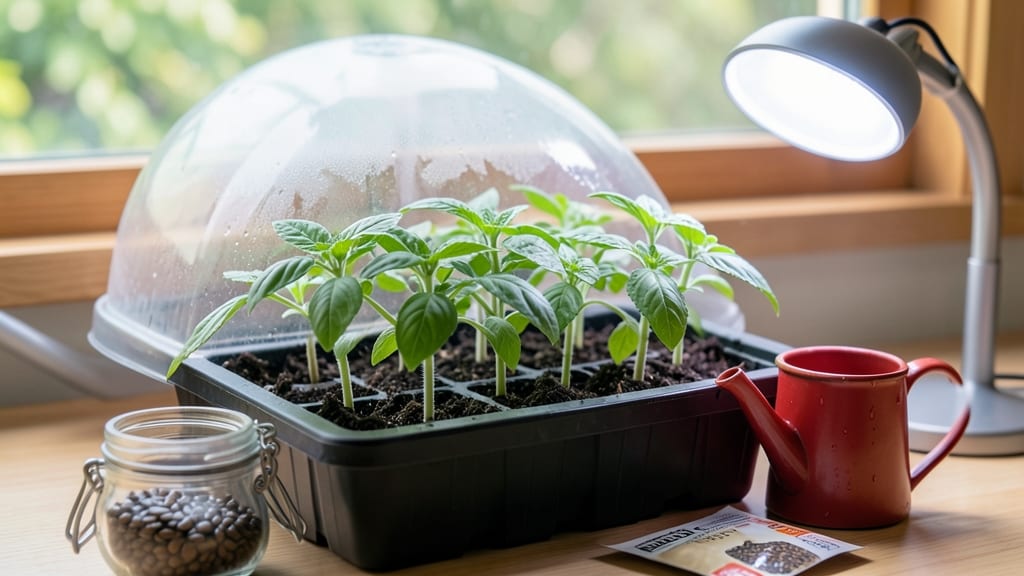
Growing basil from seed indoors puts fragrant, homegrown leaves within arm's reach year-round—no greenhouse needed. 🌱 I've turned my kitchen windowsill into a basil powerhouse, and you can too, with just a sunny spot, a few supplies, and patience.
The first true leaves appear in about 10-14 days, and by 30 days, you'll be harvesting enough for pesto, salads, and sandwiches without ever setting foot outside.
The secret isn't fancy equipment—it's matching basil's Mediterranean roots to your indoor conditions. Start with genovese or sweet basil seeds (they're the easiest for beginners), plant them ¼-inch deep in moist seed-starting mix, and keep the soil warm (around 70°F).
A simple grow light or south-facing window handles the light needs, and a clear plastic bag creates the humidity basil craves while germinating. Most people overwater here—keep the soil damp, not soggy.
By week 3, you'll see stocky seedlings ready for transplanting into slightly larger pots (3-4 inches across). Pinch off the top set of leaves to encourage bushier growth, and feed with diluted liquid fertilizer every 2-3 weeks.
The payoff? Fresh basil that tastes better than store-bought and never wilts from the grocery bag to your plate. Plus, you'll beat the season by 6-8 weeks, ensuring you're not scrambling for basil when tomatoes are ready to harvest.
This method works for any indoor space—even north-facing apartments with grow lights. The only real mistake is giving up too soon; basil seeds germinate slowly, and seedlings need consistent care. But once you master it, you'll never buy basil again. Here's how to make it happen without the guesswork.
📚 In This Guide
- What you need
- Instructions
- Tips and common mistakes
- Wrapping up and next steps
What you need
- ● Basil seeds: 1 packet (50–100 seeds, organic preferred for best flavor)
- ● Seed-starting mix: 1 small bag (2–3 quarts) of sterile, lightweight potting soil (avoid garden soil—it’s too dense!)
- ● Containers: 2–4 small pots (3–4 inches deep) with drainage holes or
- ● 1 long shallow tray (like a seedling flat) with drainage holes
- ● Drainage trays or saucers: 1–2 (to catch excess water)
- ● Spray bottle: 1 (for gentle watering)
- ○ Grow lights (optional but helpful): 1–2 LED or fluorescent lights (12–16 inches above plants for 12–16 hours/day)
- ● Plant labels: Small sticks or markers to track varieties (e.g., Genovese, Thai, or Purple basil)
- ● Humidity dome or plastic wrap: To retain moisture while seeds germinate
- ● Fertilizer: Balanced liquid fertilizer (diluted to half-strength) for faster growth
- ● Thermometer/hygrometer: To monitor ideal temps (70–75°F for germination)
- ● Pruning scissors: For pinching back leaves to encourage bushiness
Step-by-step instructions for growing basil from seed indoors
Here’s my foolproof method for growing basil from seed—no fancy equipment needed, just patience and a sunny window.
🌱 Step 1: Prepare Containers and Seed Starting Mix
Use small pots or seed trays with drainage holes—basil roots are shallow but need airflow. Fill them with a sterile seed-starting mix (never garden soil, which compacts and suffocates roots). Moisten the mix until it’s damp like a wrung-out sponge, but not soggy. I press it down lightly with my fingers to create a firm, even surface—this prevents seeds from sinking too deep.
Basil seeds are tiny, so I like to use a toothpick to place just one seed per cell or pot. Sowing too many leads to weak, crowded seedlings. Cover them with a thin layer of mix—no more than ¼ inch deep. Basil seeds need light to germinate, so don’t bury them too far.
💧 Step 2: Create a Humid, Warm Environment
Place the pots in a humidity dome or cover them with plastic wrap to trap moisture. Basil seeds germinate best at 70-80°F, so I set them on top of my fridge (which stays warm) or use a seedling heat mat if my home runs cooler. Keep the soil consistently moist—mist lightly with water if the surface dries out, but avoid soaking it.
Germination takes 7-14 days, but I’ve seen sprouts appear in just 5 days if conditions are perfect. Watch for tiny green shoots breaking through the soil—this is your signal to remove the cover immediately. Leaving it on too long causes mold, which can kill seedlings overnight.
☀️ Step 3: Provide Bright, Indirect Light
Once seedlings emerge, move them to the sunniest window—south-facing is ideal. Basil needs 6-8 hours of light daily, but direct midday sun can scorch tender leaves. If your window isn’t bright enough, supplement with a grow light placed 4 inches above the plants. You’ll know the light is right when seedlings grow compact and dark green, not leggy and pale.
Rotate the pots a quarter turn every few days so they don’t lean toward the light. Leggy growth is a red flag—it means they’re stretching for more light. If this happens, move the light closer or increase sunlight exposure gradually.
🌿 Step 4: Thin and Fertilize for Strong Growth
When seedlings develop 2-3 true leaves (the second set after the initial cotyledons), thin them to the strongest plant per pot. Use scissors to snip weak seedlings at the base—this prevents disturbing roots. Basil grows fast, so I fertilize lightly with a balanced liquid fertilizer (like 10-10-10) diluted to half strength every 2 weeks once true leaves appear.
Water from the bottom to encourage deep roots—place pots in a tray of water for 10 minutes, then drain excess. Overhead watering can spread disease, and basil hates soggy roots. You’ll know moisture is right when the soil feels damp but not wet to the touch.
✂️ Step 5: Prune and Harvest for Bushier Plants
Basil thrives when pruned—pinch off the top set of leaves when the plant reaches 6 inches tall. This encourages bushier growth and prevents flowering, which makes leaves bitter. Harvest regularly by cutting just above a leaf pair to promote new branches. You’ll have fresh basil in 30 days if you keep up with pruning.
Watch for pests like aphids—spray with neem oil if you spot them. Basil is sensitive to cold drafts, so keep it away from windows that open frequently. With the right light and care, your indoor basil will stay productive for months.
Tips & tricks for growing basil from seed indoors
Here's what I learned the hard way after watching seedlings fail—these tricks ensure your basil thrives from the start.
The Light Factor: Basil seedlings need that 6-8 hours of light daily to avoid leggy growth. If your window isn't bright enough, supplement with a grow light placed just 4 inches above the plants. I've found that positioning the light on a timer (14 hours on, 10 hours off) mimics natural daylight cycles perfectly. Watch for leaves turning pale yellow—this is your signal to increase light immediately.
Germination Secret: Those 7-14 days for germination can feel like forever, but consistency is key. Keep the soil temperature between 70-80°F by placing pots on top of your fridge or using a seedling heat mat. I've seen sprouts appear in just 5 days when conditions are ideal—don't be tempted to disturb the soil while waiting. The moment you see tiny green shoots, remove the cover immediately to prevent mold growth.
Pruning Technique: When your basil reaches 6 inches tall, pinch off the top set of leaves to encourage bushier growth. This might seem counterintuitive, but it prevents flowering and keeps your plant productive. I harvest by cutting just above a leaf pair, which stimulates new branch growth. Regular pruning ensures you'll have fresh basil in just 30 days—don't skip this step if you want continuous harvests.
Watering Wisdom: Basil hates soggy roots, so always water from the bottom by placing pots in a tray of water for 10 minutes, then draining excess. Overhead watering spreads disease, and you'll know moisture is right when the soil feels damp but not wet. I've ruined several batches by overwatering—trust me, less is more with basil.
Pro Tips for Basil From Seed Indoors
- Here's what I learned the hard way after watching seedlings fail—these tricks ensure your basil thrives from the start.
- The Light Factor: Basil seedlings need that 6-8 hours of light daily to avoid leggy growth. If your window isn't brig...
- Germination Secret: Those 7-14 days for germination can feel like forever, but consistency is key. Keep the soil temp...
Frequently asked questions
Got questions about growing basil from seed indoors? You’re not alone! Here are answers to the most common queries to help you succeed with your sunlit window garden.
How long does it take for basil seeds to sprout indoors?
Basil seeds typically sprout in 7–14 days when kept warm (around 70–75°F) and moist. If you’re not seeing sprouts after two weeks, check your seed viability or moisture levels. Patience is key—some varieties (like Thai basil) may take a little longer!
Can I speed up germination for faster basil growth?
Yes! Try these tricks:
- Soak seeds overnight in warm water before planting to soften the hard outer shell.
- Use a heat mat (or place the tray on top of your fridge) to maintain consistent warmth.
- Cover seeds with a humidity dome or plastic wrap to retain moisture.
Why are my basil seedlings wilting or turning yellow?
Wilting or yellowing usually signals overwatering or poor drainage. Basil hates soggy roots—let the top inch of soil dry out between waterings. Yellow leaves can also mean nutrient deficiency; try a diluted liquid fertilizer (like fish emulsion) after the first true leaves appear. Check for pests too!
Do I need grow lights if my basil isn’t getting enough window light?
If your basil leans toward the light or grows leggy (tall and weak), it’s time for grow lights. A basic LED grow bulb (12–16 hours/day) placed 6–12 inches above plants can work wonders. South-facing windows get the most natural light, but east/west windows may need supplemental lighting—especially in winter!
Can I grow basil indoors year-round, or should I replant seeds?
Basil is an annual herb, so it won’t regrow from the same seeds indefinitely. However, you can harvest and replant seeds from your mature plants for the next season! For year-round basil, simply restart with new seeds every 3–4 months to ensure fresh, vigorous growth. Pro tip: Save seeds from your healthiest plants!
What’s the best way to harvest basil without killing the plant?
Always snip leaves from the top (just above a leaf node) to encourage bushier growth. Avoid cutting more than ⅓ of the plant at once, and never take leaves from the center—this disrupts airflow and invites pests. For continuous harvests, pinch off flowers to redirect energy to leaf production!
Wrapping up and next steps
Growing basil from seed indoors is a rewarding journey that brings fresh, aromatic herbs right to your kitchen in just 30 days! With the right setup—sunlight, patience, and a little care—you’ll enjoy a thriving plant perfect for cooking or gifting.
Whether you’re a beginner or a seasoned gardener, this method proves that homegrown success is always within reach. 🌱
Ready to harvest? Once your basil is flourishing, try pruning, harvesting leaves, or even propagating cuttings to expand your green space. Happy growing—your future meals (and taste buds) will thank you! 🍴