Planting
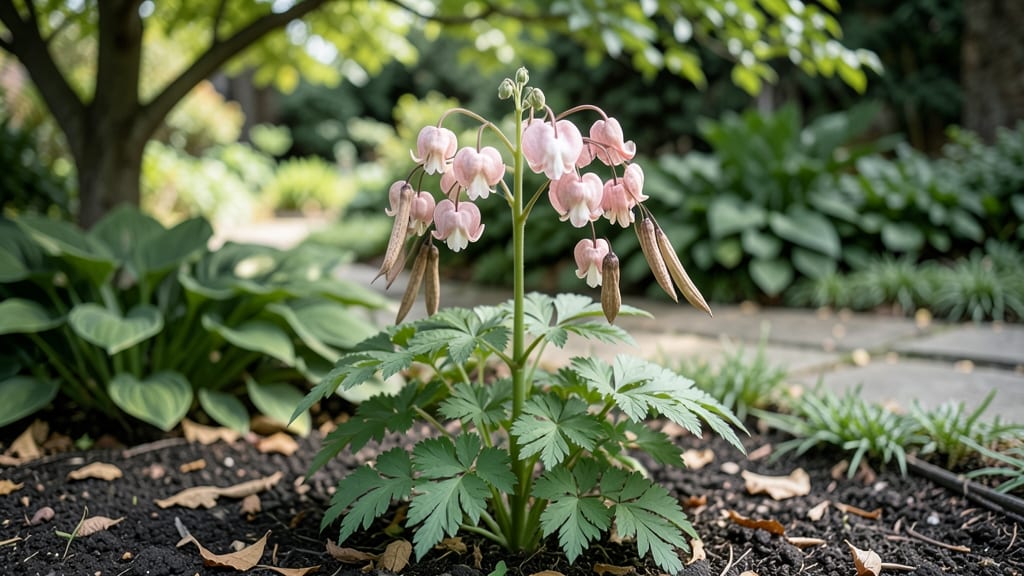
Bleeding heart plant seed pods hold the key to next year’s shady garden drama—if you know the cold-moist trick that breaks their stubborn dormancy. 🌿 I’ve wrestled with these delicate pods for years, and the secret isn’t just patience—it’s mimicking their natural woodland conditions where they’d otherwise rot or refuse to sprout.
The process starts with collecting mature pods (they’ll turn from green to papery brown) and extracting the tiny, flat seeds inside. No fancy tools needed—just a bowl and a little care.
The real magic happens when you store them in a sealed container with barely damp sphagnum moss, then refrigerate for 6-8 weeks to simulate winter. This cold-moist treatment tricks the seeds into thinking spring’s arrived.
By planting time, you’ll have seedlings pushing through the soil, ready to become the heart-shaped stars of your shade garden. The payoff? Plants that thrive where others fail, with those iconic pink or white blooms dangling like nature’s chandeliers.
Pair them with ferns or hostas for a woodland retreat that feels like a secret garden.
Timing’s everything—start seeds indoors in early spring or direct-sow after last frost. And if you miss the window? Don’t toss those pods. Store them dry in the fridge for up to a year, and try again next season. The trick works, I promise.
📚 In This Guide
- What you need
- Instructions
- Tips and common mistakes
- Wrapping up and next steps
What you need
- ● Fresh bleeding heart seed pods – Collect them in late summer or early fall when they’re ripe but not yet dried out.
- ● Seed-starting mix – A well-draining, sterile mix (e.g., 50% peat moss, 30% perlite, 20% vermiculite). ~1 gallon per batch.
- ● Small seed trays or pots – 2–3 inch deep, with drainage holes (e.g., 6–12 cell packs).
- ● Plastic wrap or humidity dome – To maintain moisture.
- ● Spray bottle – For gentle watering.
- ● Cold stratification setup – A refrigerator with a crisper drawer (or a cold, dark basement).
- ● Seed pod scissors – For carefully snipping open mature pods.
- ● pH testing kit – To ensure your mix is slightly acidic (pH 6.0–6.5).
- ● Grow lights or sunny windowsill – For post-stratification light exposure.
- ● Plant labels & markers – To track germination dates.
How to harvest and store bleeding heart seed pods for next year
This cold-moist trick guarantees strong, healthy seedlings—no more struggling with finicky germination.
🌿 Step 1: Harvest Mature Seed Pods at the Right Time
Wait until the seed pods turn a deep brown and begin to split open naturally—this usually happens in late summer to early fall. You'll see the pods crack along their seams, revealing tiny black seeds inside. Harvest them on a dry day when the pods are fully mature but still intact.
Gently twist the pods from the stem, being careful not to crush them. Place them in a paper bag and store in a cool, dry place for 1-2 weeks to ensure any remaining moisture evaporates. This drying step prevents mold during storage.
💧 Step 2: Stratify Seeds with the Cold-Moist Trick
Fill a small plastic bag with moistened peat moss or coconut coir—just damp, not soggy. Add the dried seed pods and seal the bag tightly. Place it in a refrigerator (not freezer) for 8-12 weeks to simulate winter conditions. This cold-moist stratification mimics nature and breaks seed dormancy.
Check the bag every 2-3 weeks to ensure the moss stays moist but not dripping. If it dries out, spritz lightly with water. The seeds need this consistent moisture to soften their outer coating and prepare for germination.
☀️ Step 3: Sow Stratified Seeds in Early Spring
After stratification, remove the seeds from the bag and sow them ¼ inch deep in a well-draining seed-starting mix. Use small pots or a seed tray to give each seed plenty of space—crowding leads to weak, leggy seedlings. Keep the soil evenly moist but never waterlogged.
Place the pots in a bright, indirect light spot (like a north-facing window) and maintain 60-65°F soil temperatures. Germination can take 3-6 weeks, so patience is key. Thin seedlings to the strongest one per pot once they develop true leaves to avoid competition.
⏰ Step 4: Harden Off Seedlings Before Transplanting
Once seedlings reach 3-4 inches tall and have 4-5 true leaves, start hardening them off. Move pots outside for 1-2 hours on the first day, gradually increasing exposure over 10-14 days. Choose a sheltered spot to protect them from harsh winds or direct sun.
Transplant outdoors after the last frost when soil temperatures are consistently above 50°F. Dig a hole slightly deeper than the root ball and space plants 12-18 inches apart to allow for their mature size. Water deeply after planting to settle the soil.
Tips & tricks for perfect bleeding heart seed germination
Here's what I learned after struggling with unreliable germination for years—these tricks make all the difference.
Timing Secret: Harvest those seed pods only when they're fully mature but still intact—never wait until they've fully split open. The seeds inside will be at their peak viability, and you'll avoid the mess of scattered seeds. I've found that harvesting in early fall gives me the best results, as the seeds have had time to fully develop but haven't yet been exposed to winter elements.
Storage Wisdom: That 1-2 week drying period is crucial for preventing mold, but don't rush it! Place your paper bag of pods in a spot with good airflow—like on a mesh shelf or open kitchen cabinet. I've ruined batches by storing them in airtight containers too soon, which trapped moisture and led to mold within days. A simple fan blowing gently on the bag for a few minutes each day can speed up the process if you're short on time.
Cold-Moist Technique: When creating your cold-moist environment in Step 2, don't overpack the plastic bag. The seeds need room to breathe and shouldn't be touching each other. I learned this the hard way when my first batch of seeds suffocated and failed to germinate. Also, while the refrigerator is ideal, a root cellar or unheated garage can work too—just keep it consistently cool (around 35-40°F) and check moisture levels regularly.
Lighting Tip: For Step 3, if you don't have a north-facing window, consider using a grow light on a timer for 12-14 hours per day. Regular household lights won't provide the spectrum needed for strong seedling development. I use a simple LED grow light that costs under $20 and has made a world of difference in my germination rates compared to natural light alone.
Pro Tips for Bleeding Heart Plant Seed Pods
- Here's what I learned after struggling with unreliable germination for years—these tricks make all the difference.
- Timing Secret: Harvest those seed pods only when they're fully mature but still intact—never wait until they've fully...
- Storage Wisdom: That 1-2 week drying period is crucial for preventing mold, but don't rush it! Place your paper bag o...
Frequently asked questions
Got questions about harvesting, storing, or growing Bleeding Heart (Dicentra spectabilis) seed pods?
Here are the most common ones—and their answers—to help you plan for next year’s garden success!
How do I know when Bleeding Heart seed pods are ready to harvest?
Harvest pods when they turn papery-brown and begin splitting open (usually late summer to early fall). Wait until they’re fully dry—if they’re still green, they’re not ready! Use sharp scissors to snip them cleanly to avoid damaging the plant.
Can I save Bleeding Heart seeds from my garden, or do I need to buy new ones?
Seeds from your own plants are 100% viable—just ensure they’re fully mature and stored properly. Hybrid varieties (like ‘Alba’ or ‘Gold Heart’) may not always produce true-to-type offspring, but the seedlings are still gorgeous!
What’s the best way to store Bleeding Heart seed pods over winter?
Store pods in a cool, dry place (like a paper envelope in the fridge) until spring. For extra insurance, stratify them: Place pods in a sealed bag with damp peat moss, then refrigerate for 4–6 weeks before planting. This mimics nature’s cold-moist trick!
Why aren’t my Bleeding Heart seeds germinating? Troubleshooting tips?
If seeds aren’t sprouting, check these:
- Freshness: Older seeds (over 1 year) may need stratification.
- Depth: Plant seeds shallowly (¼ inch deep) in moist soil.
- Patience: Germination can take 3–6 weeks—don’t give up!
- Light: Bleeding Hearts prefer partial shade; too much sun can stress seedlings.
Are there alternatives to growing from seed pods?
Yes! If seeds seem tricky, try:
- Division: Split mature plants in early spring or fall.
- Cuttings: Root softwood cuttings in summer (keep humid!).
- Nursery plants: Buy established tubers for instant blooms.
Wrapping up and next steps
Growing bleeding heart plant seed pods with the cold-moist method is your ticket to vibrant, thriving plants next season! 🌱 By mimicking nature’s chilly stratification, you’ll boost germination rates and enjoy lush, heart-shaped blooms year after year.
Now that you’re armed with the right techniques and answers to common questions, there’s no better time to take action.
🌿 Your Next Step:
Gather your supplies, follow the steps, and watch your garden transform. Share your progress with fellow plant lovers—every seedling starts with a single pod! Happy planting! 🌸