Size
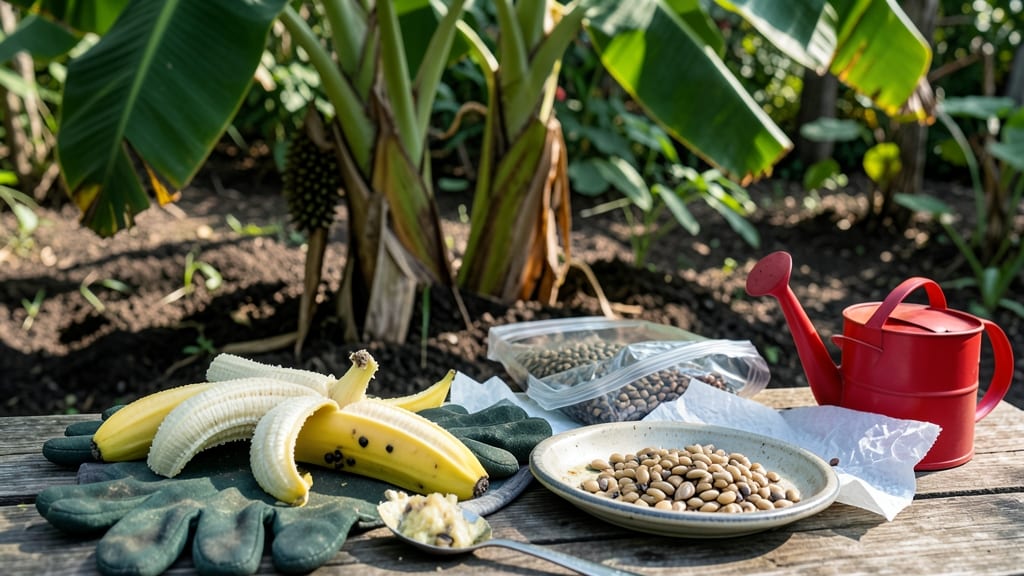
How to get banana seeds in grow a garden is easier than you think—and every seed could grow into a tropical showstopper. 🌱 I’ve saved seeds from store-bought bananas to turn my backyard into a mini jungle, and the process takes less than 10 minutes once you know the trick. The key? Patience with germination, since these seeds need warmth and moisture to wake up.
You’ll need ripe bananas (the sweeter, the better), a knife, a bowl of water, and a warm spot with bright indirect light. The seeds inside are tiny but packed with potential—if you plant them right, you could have a banana plant in 3-6 months.
Most people skip this step, but growing from seed means you’ll get a plant that’s uniquely yours, not a store-bought clone.
Once you’ve cracked open the seed, soak it overnight to soften the hard shell, then plant it in a shallow tray with damp potting mix. Keep it warm (around 75°F) and mist it daily—you’ll see sprouts in 2-4 weeks if conditions are perfect.
The first leaves will look like a tiny fiddlehead fern, but don’t worry, it’s exactly what you want.
This method works for any banana variety, even if it’s not cold-hardy. Start small with a few seeds, and you might just end up with a banana plant that thrives in your climate—or at least makes a stunning houseplant. Here’s how to do it without the guesswork.
📚 In This Guide
- What you need
- Instructions
- Tips and common mistakes
- Wrapping up and next steps
What you need
- ● Ripe bananas: Choose organic or pesticide-free bananas for the best results (about 3-5 bananas per batch).
- ● Sharp knife or scissors: A small, clean knife or kitchen shears to slice open the banana.
- ● Paper towels or coffee filters: For drying and storing the seeds (1-2 sheets per batch).
- ● Small bowl or container: To collect and rinse the seeds (preferably glass or ceramic for easy cleaning).
- ● Water: For rinsing seeds (room temperature).
- ● Plastic bag or airtight container: To store seeds while they dry (e.g., a ziplock bag with a tiny hole for airflow).
- ● Patience and a warm spot: Seeds need 1-2 weeks to dry properly—think sunny windowsill or a cozy indoor spot!
- ● Magnifying glass: For spotting tiny seeds if your eyes need a little help! 🔍
- ● Label and marker: To track seed batches (e.g., "Banana Seeds – Harvested 5/2024").
- ● Seedling trays or pots: If you’re ready to plant right away (small pots with drainage holes work great).
- ● Potting soil: Well-draining mix for future planting (cactus or succulent soil is ideal for banana seeds!).
- ● Spray bottle: To mist seeds lightly if they dry too fast.
Step-by-step guide to extracting and saving banana seeds
Here’s how to rescue those tiny black seeds from your banana peel—no fancy tools needed.
🍌 Step 1: Select and Prepare the Right Banana
Pick a ripe banana with soft, dark spots—these contain the most viable seeds. Cut the peel lengthwise and scrape out the stringy fibers to expose the seeds. I like to rinse the seeds under cool water to remove any pulp clinging to them.
Spread them on a paper towel and let them dry for 24 hours. This prevents mold and makes the seeds easier to handle. If you’re impatient, you can skip drying and move straight to germination, but damp seeds often rot.
🌱 Step 2: Test Seed Viability Before Planting
Not all banana seeds will sprout, so test a few first. Place 5-10 seeds between damp paper towels in a sealed plastic bag. Keep them in a warm spot (75-80°F) and check daily. Within 7-14 days, you’ll see tiny sprouts—those are your winners.
If none sprout after two weeks, try a fresh batch. Banana seeds have low viability, so don’t stress if a few don’t make it. I’ve found that seeds from red bananas (like the ones in smoothies) often sprout better than grocery-store varieties.
🪴 Step 3: Plant Viable Seeds in Moist Potting Mix
Fill small pots (3-4 inches deep) with a light, well-draining potting mix—banana seedlings hate soggy roots. Plant 1-2 seeds per pot, pressing them just below the surface (¼ inch deep). Water gently until the soil is moist but not soaked.
Cover the pots with plastic wrap to retain humidity and place them in bright, indirect light (no direct sun yet). Keep the soil consistently moist—not dripping wet—and expect sprouts in 2-4 weeks. If mold appears, remove the plastic and let the soil dry slightly before re-covering.
☀️ Step 4: Transition to Sunlight and Monitor Growth
Once seedlings have 2-3 true leaves, remove the plastic wrap and move them to a sunny windowsill or under grow lights. Banana plants need 6+ hours of light daily, but direct midday sun can scorch young leaves. Gradually increase sunlight over 1-2 weeks to avoid shock.
Watch for leggy growth—a sign of insufficient light. If stems stretch thin and pale, move the plant closer to the light source. You’ll know it’s thriving when new leaves appear dark green and sturdy. At this stage, fertilize lightly with a balanced liquid fertilizer (half-strength) every 4-6 weeks.
⏰ Step 5: Prepare for Long-Term Care or Transplanting
Banana seedlings grow slowly at first, but once they reach 6-12 inches tall, they’ll start putting on height fast. If you’re growing in pots, choose large containers (10+ gallons)—bananas have massive root systems. In frost-free climates, transplant outdoors after the last frost, but most gardeners keep them in containers.
Here’s the thing—banana plants grown from seed take 3-5 years to fruit, so patience is key. But the journey is worth it. Keep the soil moist, protect from cold drafts, and enjoy watching your tropical tree grow. If you’re in a cold climate, overwinter the plant indoors near a bright window.
Tips & tricks for growing banana plants from seed
These little-known tricks will help you maximize your chances of growing a thriving banana plant from those tiny seeds.
Selection Tip: Focus on bananas with the most seeds—these are often the most viable. I’ve noticed that the seeds near the stem tend to be larger and more likely to sprout. For best results, choose bananas that are slightly overripe (with black spots) as they contain more developed seeds. Don’t worry about the size of individual seeds—they’re all you’ll get, and every one counts!
Germination Strategy: The 75-80°F temperature range for germination is crucial, but don’t stress about exact thermometers. A warm spot could be near your oven (when turned off), on top of your fridge, or even in a sunny windowsill during the day. I’ve had success using a seedling heat mat set to low—it keeps the environment consistently warm without overheating. Remember, banana seeds need warmth to break dormancy, but they’ll rot if they’re too wet.
Planting Wisdom: When planting your 1-2 seeds per pot, space them about 1 inch apart to prevent overcrowding as they grow. The ¼-inch depth is perfect—deep enough to protect them but shallow enough to allow easy access to moisture. Use your finger to make small divots in the soil, then gently press the seeds in. This method keeps them stable while allowing roots to emerge easily. For extra insurance, you can plant 2 seeds per pot and thin to the strongest sprout later.
Light Transition: The gradual 1-2 week transition to full sunlight is where most beginners make mistakes. Start by placing your seedlings near an east-facing window where they’ll get gentle morning light. If you notice the leaves turning pale or stretching (called etiolation), it’s time to move them closer to the light source. I’ve found that rotating pots a quarter turn daily helps prevent lopsided growth as they reach for the light. This careful transition prevents shock and gives your seedlings time to adjust to stronger light conditions.
Pro Tips for Get Banana Seed In Grow A Garden
- These little-known tricks will help you maximize your chances of growing a thriving banana plant from those tiny seeds.
- Selection Tip: Focus on bananas with the most seeds—these are often the most viable. I’ve noticed that the seeds near...
- Germination Strategy: The 75-80°F temperature range for germination is crucial, but don’t stress about exact thermome...
Frequently asked questions
Got questions about saving banana seeds or growing them later? Here are some common ones—and their answers—to help you feel confident in your gardening journey!
Can I grow a banana tree from a store-bought banana seed?
Yes, but it takes patience! Store-bought bananas often have seeds that are small and non-viable (or sterile). Look for large, plump seeds in organic or heirloom bananas—they’re more likely to sprout. If you’re unsure, test a few!
How long does it take for a banana seed to germinate?
Germination can take anywhere from 2 weeks to 3 months, depending on conditions. Keep the soil moist but not soggy, and place the pot in a warm, bright spot (like a sunny windowsill). Patience is key—some seeds surprise you with quick sprouts!
What’s the best way to store banana seeds until planting?
Store seeds in a paper towel or damp sphagnum moss inside a sealed plastic bag in the fridge for up to 3 months. Avoid drying them out, and check occasionally for mold. Label the bag with the date to track freshness!
Can I grow a banana tree indoors?
Start seeds indoors in small pots with well-draining soil. Use a grow light if natural sunlight is limited. Once the seedling reaches 12 inches tall, transplant it outdoors (if your climate allows) or keep it as a houseplant. Just know it’ll need lots of light!
Why isn’t my banana seed sprouting?
Common reasons include:
- Old or dried-out seeds—test freshness by soaking in water (floating seeds are likely dead).
- Poor soil drainage—use a mix of potting soil and perlite to prevent rot.
- Temperature issues—banana seeds thrive in 70–85°F soil.
- Patience—some seeds take months to wake up!
Wrapping up and next steps
Growing banana seeds from your garden is a rewarding journey that combines patience, creativity, and a little science!
Whether you’ve extracted seeds from a banana, saved them from a fruit, or even sprouted one from a store-bought banana, you now have the tools to nurture a unique plant. Start small—plant your seed in soil, keep it warm, and watch it grow into a thriving banana plant! 🌱
Ready to take the next step? Experiment with different banana varieties, document your progress, or even share your success with fellow gardeners. Your green thumb is about to shine brighter than ever!