
Propagation
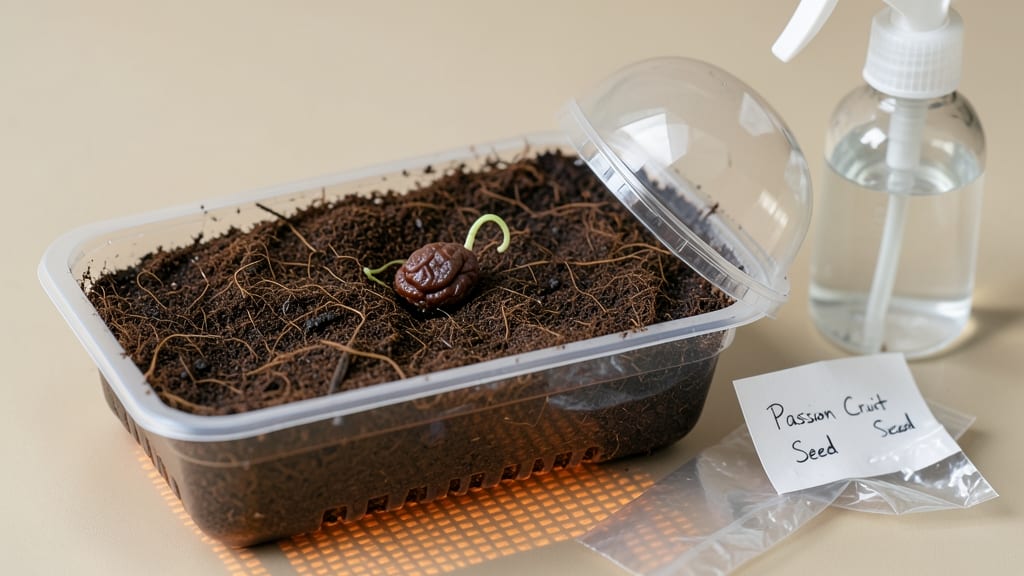
Passion fruit seed germination needs moisture-controlled conditions to break dormancy—too dry and they won’t sprout, too wet and they’ll rot. 🌱 I’ve learned that patience is key: while some seeds pop in 10 days, others take 30, but with the right setup, you’ll see those first green shoots within a month.
The secret isn’t fancy equipment—just consistent moisture, warmth, and a breathable growing medium.
Start with a shallow tray or small pots filled with a sterile, well-draining mix (equal parts peat moss and perlite works). Plant seeds just ¼-inch deep, then mist the surface until damp—not soggy.
Cover with plastic wrap or a humidity dome to trap moisture, but check daily for mold. A 70-80°F spot near a sunny window (or under grow lights) keeps them cozy without overheating.
Once sprouts appear, remove the cover and keep soil evenly moist—never soggy. Yellowing leaves mean too much water; wrinkled soil means it’s dry. Passion fruit seedlings are delicate, so avoid disturbing them until they have 2-3 true leaves.
That’s when you’ll transplant them to larger pots or the ground.
Troubleshooting is half the fun: slow germination? Try soaking seeds overnight first. Black mold? Increase airflow. With this method, you’ll go from tiny seeds to vining plants ready for training in just a few months. Here’s how to keep them thriving!
📚 In This Guide
- What you need
- Instructions
- Tips and common mistakes
- Wrapping up and next steps
What you need
- ● Passion fruit seeds: 5–10 fresh, plump seeds (harvested from ripe fruit—avoid dried or shriveled seeds).
- ○ Seed-starting mix: 2–3 cups of well-draining, sterile potting soil (or a mix of 50% peat moss + 50% perlite/vermiculite). Optional: Add a handful of coconut coir for moisture retention.
- ● Small pots or seed trays: 3–4 biodegradable pots (3–4 inches deep) or a seed tray with drainage holes. Alternative: Use recycled containers (yogurt cups, egg cartons) with drainage punctured.
- ● Spray bottle: 8–16 oz with a fine mist nozzle (for gentle hydration).
- ● Plastic wrap or humidity dome: A clear plastic bag or a DIY cover (e.g., cut plastic bottle) to create a humidity tent.
- ● Grow lights or sunny windowsill: Access to bright, indirect light (6+ hours/day). Grow lights (LED or fluorescent) are ideal for controlled environments.
- ● Watering can or cup: For occasional soil hydration (avoid overwatering!).
- ● Heating mat: A seedling heat mat (70–75°F) to speed up germination (especially in cooler climates).
- ● pH meter or testing kit: To ensure soil pH is 6.0–7.0 (passion fruit prefers slightly acidic soil).
- ● Fertilizer (diluted): A balanced, water-soluble fertilizer (5-5-5 or 10-10-10) for post-germination care (use half-strength after 4–6 weeks).
- ● Label markers: To track seed varieties or planting dates.
- ● Tweezers: For delicate seed placement (if seeds are tiny).
Step-by-step instructions for germinating passion fruit seeds
Here's how I turn passion fruit seeds into strong seedlings—with the right moisture balance and patience.
🌱 Step 1: Select and Prepare the Seeds
Choose plump, dark seeds from fully ripened passion fruit—these have the highest germination success. Rinse them gently under lukewarm water to remove any pulp residue, then let them dry on a paper towel for 12-24 hours. The goal is to remove excess moisture without letting them dry out completely.
I like to soak the seeds for 24 hours in a glass of water before planting. This softens the hard outer shell and kickstarts the germination process. Place a small plate over the glass to keep seeds submerged without overcrowding—you'll see tiny white roots emerge in 1-2 days.
💧 Step 2: Set Up the Germination Container
Fill a shallow container (like a seed tray or even a repurposed plastic lid) with a mix of 50% peat moss and 50% perlite. This lightweight blend ensures proper drainage while maintaining moisture. Moisten the mix until it feels like a damp sponge—squeeze it gently, and a few drops should bead on the surface.
Plant the pre-soaked seeds ½ inch deep, spacing them 2 inches apart. Cover the container with clear plastic wrap or a humidity dome to create a greenhouse effect. Place it in a warm spot (ideally 75-85°F)—a seedling heat mat works wonders if your home runs cooler.
☀️ Step 3: Maintain Consistent Moisture and Light
Check the container daily but only mist the soil when the surface feels dry to the touch. Overwatering suffocates seeds, while letting them dry out halts germination. You'll know moisture is right when condensation forms on the plastic wrap but no water pools at the bottom.
Once sprouts appear (usually 7-14 days), remove the plastic cover immediately to prevent fungal growth. Place the tray under bright, indirect light—a south-facing window or grow light on a 12-hour cycle. You'll see the first true leaves (not the initial seed leaves) emerge in 3-4 weeks.
🌿 Step 4: Transplant Seedlings to Individual Pots
When seedlings reach 3-4 inches tall with 3-4 true leaves, it's time to transplant. Fill 4-inch pots with a well-draining potting mix (equal parts peat moss, perlite, and compost). Gently remove each seedling, keeping the root ball intact, and plant it 1 inch deeper than it grew in the tray.
Water lightly after transplanting to settle the soil, then reduce watering to every 2-3 days until new growth appears. Harden off seedlings by placing them outside in partial shade for 1 hour daily over 5-7 days before moving them to full sun. This gradual transition prevents shock and encourages sturdy growth.
Tips & tricks for passion fruit seed germination
Here's what I learned after watching my first batch of passion fruit seeds struggle with inconsistent moisture—these tricks make all the difference.
Seed Selection: The darkest, plumpest seeds from fully ripened fruit are your best bet. I've found that seeds from passion fruits that split open naturally on the vine germinate fastest. If you're working with dried seeds, soak them in warm water for 12-24 hours to soften their tough outer shells—this is where most beginners go wrong by skipping the soaking entirely.
Soaking Strategy: Don't just toss seeds in water and forget about them! Place a small plate over your glass to keep them submerged without overcrowding. I've seen seeds float to the surface and dry out when left uncovered. After 24 hours of soaking, you should see tiny white roots—this is your signal to plant immediately before they dry out.
Temperature Control: Passion fruit seeds are tropical creatures—they thrive in warmth. While the instructions suggest 75-85°F, I've found that a seedling heat mat set to 85°F dramatically speeds up germination. If your home runs cooler, place the container on top of your refrigerator (not inside) for consistent warmth. Just avoid direct sunlight during this stage—it can overheat the seeds.
Transplant Timing: Wait until seedlings reach 3-4 inches tall with 3-4 true leaves before transplanting. This might seem like a long wait, but rushing it weakens the root systems. I've noticed that seedlings transplanted too early often develop leggy stems trying to reach light, while those given extra time develop stronger stems and roots for the transition to individual pots.
Pro Tips for Passion Fruit Seed Germination
- Here's what I learned after watching my first batch of passion fruit seeds struggle with inconsistent moisture—these ...
- Seed Selection: The darkest, plumpest seeds from fully ripened fruit are your best bet. I've found that seeds from pa...
- Soaking Strategy: Don't just toss seeds in water and forget about them! Place a small plate over your glass to keep t...
Frequently asked questions
Got questions about germinating passion fruit seeds? You’re not alone! Here are answers to the most common concerns to help you succeed.
How long does it take for passion fruit seeds to germinate?
With the right conditions—warmth (70–85°F), consistent moisture, and indirect light—passion fruit seeds typically sprout in 14–30 days. Some may take longer, especially if stored improperly. Patience is key! Monitor soil moisture daily to avoid delays.
Can I germinate passion fruit seeds in cold weather?
Cold weather slows germination significantly. If temperatures drop below 60°F (15°C), seeds may take weeks longer—or fail entirely. Use a seedling heat mat or germinate indoors near a sunny window until soil warms up. A mini greenhouse can also help.
What if my seeds rot instead of sprouting?
Overwatering is the #1 cause of seed rot. Passion fruit seeds need moist (not soggy) soil. If you notice mold or a foul smell, reduce watering and improve drainage by mixing in perlite or sand. Let the top inch of soil dry slightly between waterings.
Can I grow passion fruit from store-bought seeds?
Yes! Store-bought passion fruit seeds will germinate, but the resulting plant may not produce fruit identical to the parent variety. For consistent results, use seeds from organic, heirloom, or hybrid passion fruit (like ‘Panama Red’ or ‘Sweetie’). Save seeds from homegrown fruit for better predictability.
How do I speed up germination?
Try these pro tips to encourage faster sprouting:
- Soak seeds in warm water for 24 hours before planting to soften the outer shell.
- Use a seedling heat mat to maintain consistent warmth.
- Plant seeds ¼-inch deep in well-draining soil (coco coir + perlite works well).
- Provide 12+ hours of indirect light daily (grow lights help if natural light is weak).
What do I do if my seedlings look weak or leggy?
Leggy seedlings often mean they’re stretching for light. Move them closer to a bright window or under a grow light (10–12 inches away). If leaves are pale, dilute fertilizer (like fish emulsion) to ¼ strength and avoid overwatering. Prune leggy stems to encourage bushier growth.
Wrapping up and next steps
Germinating passion fruit seeds is a rewarding journey that blends patience with the joy of nurturing life! With the right balance of moisture, warmth, and care, you’ll see those tiny seeds sprout into vibrant seedlings in just 30 days.
Whether you’re a seasoned gardener or a curious beginner, this process is your gateway to lush passion fruit vines—packed with delicious fruit and stunning blooms.
Now that you’re armed with the know-how, roll up your sleeves and start planting! Keep a germination journal to track progress, and soon, you’ll be harvesting your own homegrown passion fruit. Happy growing! 🌱✨