
Size
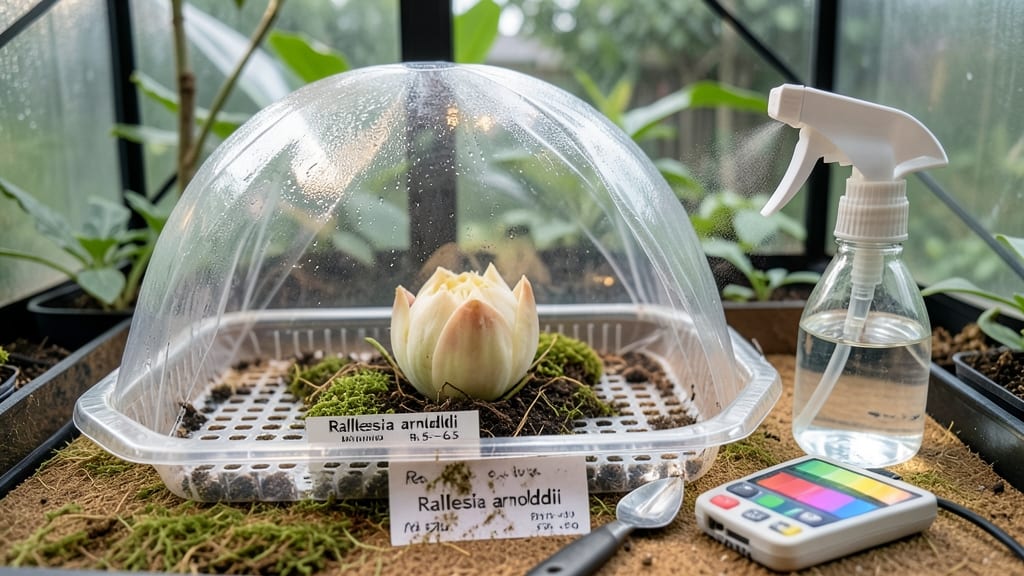
Growing a rafflesia from seed is the ultimate gardening challenge—one that could put the world's largest flower in your backyard. 🌿 This parasitic plant demands jungle-like conditions, but with the right setup, you might just coax it into blooming its 3-foot-wide, meaty-red flowers that smell like rotting flesh.
The process isn’t for the faint of heart, but the reward is unmatched.
First, you’ll need tropical humidity (80%+), warm temperatures (75-85°F), and a host vine like Tetrastigma, since rafflesia seeds won’t grow without one. Sourcing seeds legally is tricky—they’re endangered, so only buy from reputable botanical suppliers.
Germination takes 3-6 months, and the plant may take 5-10 years to bloom, if ever.
Once established, your rafflesia will thrive in dappled shade, mimicking its native forest floor. Keep the soil moist but never soggy, and watch for signs of stress—yellowing leaves or wilting mean it’s time to adjust humidity or light. Patience is key; this isn’t a fast-growing houseplant.
Ethically, this plant is a conservation concern, so avoid wild collection. If successful, you’ll have a living piece of Southeast Asian rainforest—and possibly the only rafflesia in your neighborhood. Ready for the adventure?
📚 In This Guide
- What you need
- Instructions
- Tips and common mistakes
- Wrapping up and next steps
What you need
- ● Rafflesia seeds: Fresh, viable seeds (obtainable from specialized nurseries or research institutions—not available from wild sources due to conservation laws).
- ● Host plant (Tetrastigma spp.): Live vines (3–5 plants) for the Rafflesia to parasitize—essential for growth!
- ● Greenhouse or shaded outdoor space: Humidity levels of 80–90% and temperatures between 70–85°F (21–29°C).
- ● Potting mix: Well-draining, sterilized blend of 50% peat moss and 50% perlite (or coconut coir for moisture retention).
- ● Large containers: 10–15 gallon pots with drainage holes for the host vines.
- ● Misting system or humidifier: To maintain high humidity without fungal risks.
- ● pH meter & fertilizer: Balanced 10-10-10 NPK (diluted to half-strength) for host plants; Rafflesia relies on the host for nutrients.
- ● Pruning shears & gloves: For handling vines and seeds (sterilize tools with 70% isopropyl alcohol).
- ● Shade cloth (30–50% coverage): Protects from direct sunlight while allowing filtered light.
- ● Automated climate controller for precise humidity/temperature management.
- ● Grow lights (if natural light is insufficient).
- ● Fungal treatment (e.g., neem oil) to prevent mold on seeds/vines.
- ● Journal or app to track growth stages and conditions.
- ● Support trellis for host vines to climb and spread.
Step-by-step guide to growing Rafflesia from seed
This rare jungle giant won’t grow in a backyard—it needs a precise tropical setup. Here’s how to create its ideal conditions.
🌱 Step 1: Source and Prepare Viable Rafflesia Seeds
Rafflesia seeds are rare and often collected from wild orchids in Southeast Asia. If you’ve obtained them, they must be fresh—seeds lose viability within 2-3 weeks. Remove seeds from their fleshy pulp immediately, as fermentation kills them. Rinse gently in lukewarm water to remove residual fruit sugars, then pat dry with sterile paper towels.
Plant the seeds within 48 hours of collection. Unlike most plants, Rafflesia seeds won’t germinate without a mycorrhizal fungus—their natural partner in the wild. You’ll need to inoculate the soil with a Rhizopogon or Tuber species, available from specialty mycorrhizal suppliers. Mix 1 teaspoon of fungal inoculant into the top ½ inch of soil where seeds will be placed.
🪴 Step 2: Create a Tropical Microclimate Chamber
Rafflesia thrives in high humidity (80-90%), warmth (75-85°F), and constant shade. Use a clear plastic propagator or glass terrarium with a fine mesh lid to retain moisture. Fill with a sterile mix of 50% peat moss, 30% perlite, and 20% coconut coir—this mimics the airy, acidic soil of its native rainforest floor.
Place the container in a shaded greenhouse or under artificial grow lights set to 12 hours of low-intensity light daily. Avoid direct sunlight—it scorches delicate seedlings. Maintain consistent warmth using a seedling heat mat set to 78°F. Without these conditions, seeds may rot before germinating.
💧 Step 3: Maintain Germination Conditions for 6-12 Months
Keep the soil evenly moist but never soggy—Rafflesia seeds rot if waterlogged. Mist the chamber 2-3 times daily with sterile, room-temperature water, or use a humidifier to maintain the 80-90% humidity range. Check moisture by pressing your finger ½ inch deep—it should feel damp, like a wrung-out sponge.
Germination is slow—6 months to 2 years—and often fails without the right fungus. If no sprouts appear after 12 months, the seeds may have been nonviable or the fungal partnership incomplete. Patience is critical; even expert growers see <5% success rates in early stages.
☀️ Step 4: Transition Seedlings to Intermediate Growth Stage
Once seedlings emerge—tiny, hair-like tendrils—reduce misting to once daily and gradually increase airflow by lifting the propagator lid for 10 minutes daily. After 3 months, transplant seedlings into 4-inch pots with the same soil mix, ensuring the fungal layer is preserved.
Move pots to a shaded outdoor area (e.g., under a 50% shade cloth) where temperatures stay 70-85°F year-round. Rafflesia vines need a host plant (like a tropical shrub) to climb—gently weave the vine around the host’s trunk as it grows. Without support, the vine weakens and may die.
⏰ Step 5: Prepare for First Flowering (5-10 Years Away)
Rafflesia takes 5-10 years to flower, and even then, blooms are rare. The plant produces no leaves or stems—it’s a parasitic vine that relies entirely on its host. Monitor for swollen buds (the size of a golf ball) that appear on the vine’s surface. These will eventually grow into the 3-foot-wide, foul-smelling blooms Rafflesia is famous for.
During this time, never let the host plant die—the Rafflesia vine will wither without it. Prune host branches lightly to encourage new growth, but avoid heavy trimming. If the vine looks weak, increase humidity and check for root rot (black, mushy roots). Adjust care immediately—Rafflesia is delicate at this stage.
Tips & tricks for growing Rafflesia seeds
Rafflesia seeds demand extraordinary patience and precision—here’s how to optimize your chances of success without compromising the delicate balance of its tropical ecosystem.
Seed Viability and Preparation: The 2-3 week window for seed viability is non-negotiable. I learned this the hard way after seeing seeds I thought were fresh fail to germinate. Store seeds in a sealed, sterile container with a damp paper towel at 70°F if you can’t plant them immediately—this slows moisture loss while maintaining viability. The lukewarm water rinse is crucial too; cold water shocks the delicate seeds while hot water would cook them.
Fungal Partnership is Non-Negotiable: Don’t skip the 1 teaspoon of fungal inoculant—this is the difference between success and failure. I recommend purchasing inoculant from a reputable supplier specializing in orchid mycorrhizae. Mix it only into the top ½ inch of soil where seeds will be placed; deeper placement disrupts the natural symbiotic relationship. Think of it as Rafflesia’s "starter culture" for germination.
Microclimate Precision Matters: The 75-85°F temperature range and 80-90% humidity aren’t just suggestions—they’re survival requirements. I use a digital thermometer/hygrometer combo in my propagator to monitor these conditions constantly. If your home environment fluctuates (like most houses do), consider a small greenhouse with a built-in humidifier. The 78°F seedling heat mat is your best friend for maintaining consistent warmth during the critical germination phase.
Germination Patience Strategy: The 6 months to 2 years germination timeline is where most growers abandon ship. To stay motivated, I document progress with weekly photos and keep a log of conditions. If no sprouts appear after 12 months, don’t assume failure—some seeds take nearly double that time. The key is maintaining absolute consistency in moisture, temperature, and humidity during this period.
Pro Tips for Rafflesia Seed Grow A Garden
- Rafflesia seeds demand extraordinary patience and precision—here’s how to optimize your chances of success without co...
- Seed Viability and Preparation: The 2-3 week window for seed viability is non-negotiable. I learned this the hard way...
- Fungal Partnership is Non-Negotiable: Don’t skip the 1 teaspoon of fungal inoculant—this is the difference between su...
Frequently asked questions
How long does it take for Rafflesia seeds to germinate?
Patience is key! Rafflesia seeds can take anywhere from 6 months to 2 years to germinate, depending on conditions like temperature (70–80°F) and humidity (80%+). Some seeds may never sprout—don’t be discouraged if you don’t see progress right away. A Rafflesia’s life cycle is slow, but worth it!
Can I grow Rafflesia from seed at home, or do I need a greenhouse?
While possible, a controlled greenhouse or terrarium is highly recommended. Rafflesia thrives in tropical, humid, and shaded environments—replicating these conditions at home is challenging. If you lack space, consider host plant propagation (like Tetrastigma vines) instead, which is more beginner-friendly.
How do I know if my Rafflesia seed is still viable?
Freshness is critical! Rafflesia seeds lose viability quickly—use them within 1–2 weeks of harvest. Test viability by soaking seeds in water: if they sink (not float), they’re likely still alive. Store unused seeds in a cool, damp paper towel in the fridge for short-term preservation.
What’s the best way to protect my Rafflesia from pests?
Rafflesia is vulnerable to fungus gnats, mold, and vine borers. Prevent issues with:
- Sterile potting mix (peat moss + perlite)
- Fungicide sprays (neem oil works well)
- Avoid overwatering—keep soil moist but not soggy
Why isn’t my Rafflesia blooming after years of growth?
Don’t rush it! Rafflesia flowers only bloom once every 5–10 years—and only if the plant is fully mature (5+ years old) and conditions are perfect. Trigger blooming by mimicking its natural habitat: high humidity, partial shade, and a host vine. If it’s not blooming, check for underwatering, poor airflow, or lack of a support vine.
Pro Tip:
If seeds prove too finicky, try buying a mature Rafflesia plant from a specialty nursery. Some sellers offer pre-germinated cuttings—skipping the seed stage entirely! Just ensure it’s parasitic-free before bringing it home.
Wrapping up and next steps
Growing a Rafflesia from seed is a thrilling challenge that rewards patience with one of nature’s most spectacular blooms! 🌺 While it demands a tropical environment, precise care, and time, the journey of nurturing this jungle giant is as fascinating as the reward.
If you’ve followed these steps—from sourcing seeds to mimicking the humid, shaded conditions of its native habitat—you’re already on your way to creating a unique piece of the rainforest in your own garden.
Now, the next step? Stay consistent and observe! Monitor your plant’s progress, adjust your care routine as needed, and document its growth—you might just witness the birth of a rare, otherworldly flower. Happy growing, and may your garden bloom with the magic of the Rafflesia! 🌿✨