
Propagation
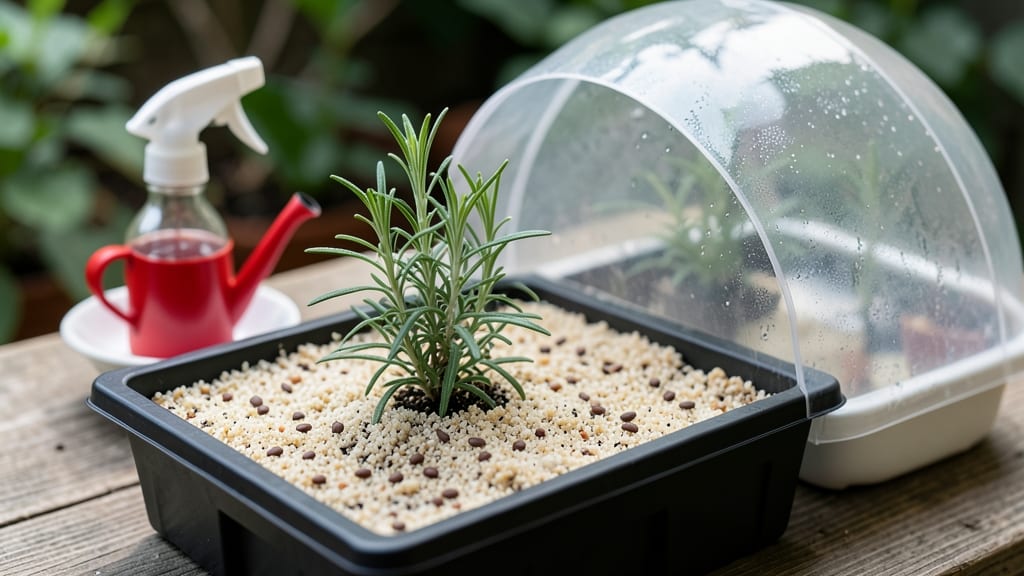
Rosemary seed germination takes patience, but the fragrant results are worth every day. 🌱 I've learned the hard way that rosemary seeds need specific conditions—too much moisture or cold temperatures will stall them for months. The key is replicating its Mediterranean habitat: warm soil, bright light, and just enough water to keep things damp without drowning the tiny seeds.
Start with a shallow tray and seed-starting mix, then scatter seeds lightly on the surface—no need to bury them. Keep the soil at 75-80°F using a heat mat if your home runs cooler, and maintain humidity with a plastic cover.
Most seeds sprout within 10-21 days, but some stubborn ones may take up to 3 weeks. That's why I recommend starting them indoors in early spring, so seedlings have time to grow strong before transplanting.
Once sprouted, thin seedlings to 2 inches apart and provide 6+ hours of sunlight daily. The first true leaves will be tiny and delicate, but they'll quickly develop the signature needle-like foliage.
You'll know you're on the right track when you see new growth within 3-4 weeks—that's when the real magic happens, and your kitchen garden becomes a fragrant reality.
Honestly, rosemary is easier to grow from cuttings, but seeds offer unique varieties. If you're patient and follow these steps, you'll end up with hardy plants that thrive for years. The secret? Consistency—keep the soil evenly moist but never soggy, and watch those first green shoots emerge like clockwork.
📚 In This Guide
- What you need
- Instructions
- Tips and common mistakes
- Wrapping up and next steps
What you need
- ● Rosemary seeds: 10–20 seeds (fresh or stored for ≤1 year for best germination rates).
- ● Seed-starting mix: 1–2 cups of sterile, well-draining potting soil (avoid garden soil—it’s too dense!). Look for a mix labeled "seed-starting" or "cactus/succulent blend" for extra airflow.
- ● Containers: Small seed trays (with drainage holes) or
- ● 4–6 individual pots (3–4 inches deep) with drainage holes.
- ● Spray bottle: 8–16 oz with a fine mist nozzle (for gentle watering).
- ● Plastic wrap or humidity dome: A clear plastic bag or propagator lid to retain moisture.
- ● Grow lights or sunny windowsill: A south-facing window (6+ hours of sunlight daily) or a LED grow light (12–16 hours/day, 6–12 inches above seeds).
- ○ Heating mat: Optional for faster germination (70–75°F is ideal).
- ● Fertilizer: A balanced, water-soluble fertilizer (5-5-5 or 10-10-10) diluted to half-strength—use after germination.
- ● Tweezers: For careful seed placement.
- ● Labeling tags: To track planting dates (rosemary can take 3–4 weeks to sprout!).
Step-by-Step instructions for germinating rosemary seeds
Here's how to coax rosemary seeds into sprouts with patience and precision.
🌱 Step 1: Prepare Seeds for Faster Germination
Rosemary seeds have a tough outer coating that slows germination. To speed things up, soak the seeds in a bowl of lukewarm water for 12-24 hours. You'll see the water turn slightly cloudy as the coating softens. Drain the seeds in a fine mesh strainer and let them dry briefly—just until they stop dripping but still feel damp to the touch.
Here's the thing—don't skip this step. Fresh, dry seeds can take 3-4 weeks to sprout, but pre-soaking cuts that time in half. I like to label my seed packets with the soak date so I remember when to check for sprouts.
🪴 Step 2: Choose Containers and Fill with Light Mix
Use small pots or seed trays with drainage holes—rosemary roots need air circulation. Fill them with a mix of 50% sterile potting soil and 50% perlite or coarse sand to prevent compaction. Press the mix down lightly so it's firm but not packed—you want roots to push through easily.
Rosemary seeds are tiny, so I plant them in rows for easier management. Use a toothpick to make small holes about ¼ inch deep, then place 2-3 seeds per hole. Cover them with a thin layer of the same soil mix—just enough to hide them completely. Mist the surface gently with water until it feels evenly damp.
☀️ Step 3: Provide Warmth and Indirect Light
Rosemary seeds germinate best at 70-75°F. Place the pots in a warm spot, like on top of your fridge or near a sunny window (but not in direct sun yet). Cover the pots with clear plastic wrap to trap moisture and warmth—this creates a mini greenhouse effect. Check daily for condensation on the plastic; if it's dripping, remove the cover for 10 minutes to let excess moisture escape.
You won't see anything for 2-3 weeks, but stay patient. The first sign of life is a tiny green shoot pushing through the soil. Once you see 50% of seeds sprouted, remove the plastic wrap immediately to prevent damping-off, a fungal disease that attacks young seedlings.
💧 Step 4: Care for Seedlings Until Transplant
When seedlings appear, move them to a location with bright, indirect light—a south-facing window works well. Water gently from the bottom by placing the pots in a shallow tray of water for 10-15 minutes. This prevents disturbing the delicate roots. Let the soil dry slightly between waterings; rosemary hates soggy roots.
Thin the seedlings to the strongest one per hole when they reach 1 inch tall. Use scissors to snip the weaker stems at soil level—this reduces transplant shock. Once seedlings have 4-6 true leaves (about 6-8 weeks total), they're ready to move into individual pots. Harden them off by placing them outside for 1 hour daily over 1 week before transplanting permanently.
⏰ Step 5: Monitor Growth and Troubleshoot
Rosemary seedlings grow slowly at first, but you'll see faster growth once they're established. Watch for yellowing leaves, which usually means overwatering or poor drainage. If leaves curl or stems stretch too tall, they need more light. Adjust the position of your grow light or move the pots closer to the window.
Real talk: rosemary seeds are finicky. If germination fails, don't give up—try soaking seeds for a longer time next batch. With patience, you'll have fragrant rosemary plants thriving in your garden within 3 months.
Tips & tricks for perfect rosemary seed germination
Germinating rosemary seeds takes patience, but these tricks will help you turn those tiny seeds into thriving plants faster.
Soaking Strategy: For the 12-24 hour soak in Step 1, use a glass bowl so you can easily monitor the water's cloudiness. If your seeds aren't fully softened after 24 hours, don't worry—just extend the soak another 12 hours. The key is watching for that slight cloudiness, which means the tough coating is breaking down. I like to use a small mesh strainer that fits over a cup so I can drain and rinse them right in the sink without losing any seeds.
Container Hack: In Step 2, if you don't have seed trays with drainage holes, use plastic yogurt cups with holes poked in the bottom. Place them in a shallow saucer to catch drainage. This works perfectly for rosemary's shallow root system and keeps the soil mix from becoming waterlogged. I've even used old muffin tins lined with coffee filters for extra drainage.
Warmth Tip: Maintaining that 70-75°F range in Step 3 is crucial. If your kitchen runs cool, place the pots on top of your refrigerator—most fridges stay around 75°F. For extra warmth, you can also place them near a sunny window during the day and move them to a warmer spot at night. A small heating mat set to low (around 70°F) works wonders if you're using a grow light setup.
Light Transition: When moving seedlings to bright, indirect light in Step 4, start with morning sun only. Direct afternoon sun can scorch young leaves. If you notice seedlings stretching toward the light (called etiolation), they need more consistent light. Rotate the pots daily so all sides get even exposure. I keep mine about 6 inches away from a south-facing window—closer than that can cause leaf burn.
Pro Tips for Rosemary Seed Germination
- Germinating rosemary seeds takes patience, but these tricks will help you turn those tiny seeds into thriving plants ...
- Soaking Strategy: For the 12-24 hour soak in Step 1, use a glass bowl so you can easily monitor the water's cloudines...
- Container Hack: In Step 2, if you don't have seed trays with drainage holes, use plastic yogurt cups with holes poked...
Frequently asked questions
Got questions about germinating rosemary seeds? You’re not alone! Here are answers to the most common queries to help you grow a thriving herb garden with confidence.
How long does it take for rosemary seeds to germinate?
Rosemary seeds are notoriously slow—expect germination to take 4 to 6 weeks under ideal conditions (warmth, moisture, and light). Patience is key! Pre-soaking seeds for 24 hours can speed things up slightly, but don’t rush it. If nothing sprouts after 8 weeks, the seeds may be old or non-viable.
Can I germinate rosemary seeds indoors in winter?
Yes, but you’ll need to mimic spring conditions. Use a heat mat (70–80°F) to keep soil warm, cover trays with plastic wrap to retain humidity, and place them near a sunny window or under grow lights. Avoid drafts—rosemary seeds hate cold soil. If your home is too chilly, try a propagator or move pots to a warmer room.
What’s the best soil mix for rosemary seed germination?
Use a light, well-draining mix like:
- 50% peat-free potting soil (or coco coir)
- 30% perlite or coarse sand (for aeration)
- 20% vermiculite or orchid bark (to prevent compaction)
Why aren’t my rosemary seeds sprouting?
Troubleshoot with this checklist:
- Cold soil: Seeds need warmth (65–75°F). Use a seedling heat mat if your home is drafty.
- Too much water: Overwatering suffocates seeds. Keep soil moist but not wet—mist lightly daily.
- Old seeds: Rosemary seeds lose viability after 1–2 years. Test freshness by crushing a seed—if it smells pungent, it’s likely good.
- Low light: Seeds need bright, indirect light (or grow lights 12+ hours/day). A north-facing window may not cut it.
Can I grow rosemary from seeds outdoors directly?
Outdoor planting is risky for seeds—they’re delicate and need controlled conditions. If you’re set on it, sow in late spring (after last frost) in a protected microclimate (like a cold frame). Use a cloche or row cover to shield seedlings from wind and pests. Most gardeners prefer starting indoors for higher success rates.
Wrapping up and next steps
Growing rosemary from seed is a rewarding journey that connects you to nature while yielding a fragrant, versatile herb! With the right conditions—patience, warmth, and a little care—you’ll see those first sprouts in just 3 weeks.
Whether you’re a seasoned gardener or a curious beginner, your green thumb is about to flourish.
Ready to take the next step? Once your seedlings are strong, transplant them into pots or your garden and watch your aromatic rosemary thrive. Happy growing! 🌱✨