
Lawn
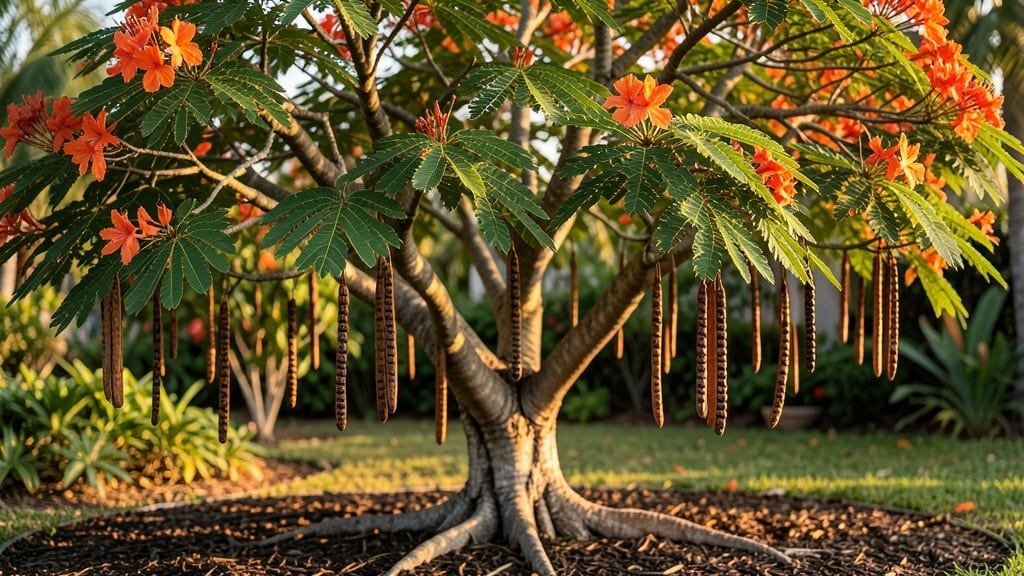
Extracting royal poinciana tree seed pods starts with patience and a sharp eye for timing. 🌿 The pods turn from green to brown and split open naturally when they're ready—don’t rush this process, as premature seeds won’t germinate.
I’ve learned the hard way that forcing them too early leads to moldy, unusable seeds.
Once the pods crack open, you’ll find flat, black seeds inside that look almost like tiny beans. These seeds need stratification—a cold, moist treatment—to break dormancy. Place them in a sealed bag with damp peat moss and refrigerate for 6-8 weeks.
This mimics winter conditions and signals the seeds it’s safe to sprout.
After stratification, sow the seeds in well-draining soil mix (equal parts potting soil and perlite) and keep them in warmth (75-85°F). Germination takes 4-12 weeks, but consistency is key—keep the soil moist but never soggy. The first true leaves will tell you it worked.
Royal poincianas thrive in USDA Zones 10-11 and need full sun to reach their iconic flame-like blooms. Young seedlings are delicate—watch for fungal issues in humid climates and avoid transplant shock by hardening them off gradually. With the right care, you’ll have a tree that outshines any nursery purchase.
📚 In This Guide
- What you need
- Instructions
- Tips and common mistakes
- Wrapping up and next steps
What you need
- ● Mature royal poinciana seed pods (harvest when pods are fully dry and brown, typically late fall/winter; aim for 5–10 pods for a small batch).
- ● Heavy-duty gloves (nitrile or leather, to protect hands from sharp edges—1 pair).
- ● Sturdy cutting board or thick cardboard (to cushion pods during splitting—1 piece, 12"x18" minimum).
- ● Hammer or mallet (with a rubber or wooden head to avoid damaging seeds—1 tool).
- ● Paper towels or newspaper (for drying seeds—2–3 sheets).
- ● Small bowl or container (for collecting seeds—1, 1-quart size).
- ● Fine-mesh strainer or sifter (to separate seeds from chaff—1, 4–6 inch diameter).
- ● Plastic zip-top bags (for seed storage—2–3 bags, resealable).
- ● Labeling tags & permanent marker (to track seed batches—5–10 tags).
- ● Seed-cleaning brush (soft-bristle, for removing debris—1).
- ● Desiccant packets (silica gel, to keep seeds dry during storage—1–2).
- ● Pruning shears (if pods are still attached to branches—1 pair).
- ● Digital scale (for weighing seeds, if tracking germination rates—1, 0.1 oz precision).
- ● Spray bottle with water (for lightly misting seeds if too dry—1).
Step-by-Step guide to extracting viable seeds from royal poinciana pods
Here's how to unlock the potential of these iconic seeds naturally—no tools required.
🌱 Step 1: Collect and Prepare Mature Pods
Royal poinciana pods turn from green to tan or brown when fully mature—this signals seeds are ready for extraction. Collect pods directly from the tree or the ground after they've fallen naturally. Avoid pods that are still green or show signs of mold, as these won't contain viable seeds.
Lay the pods on a clean, dry surface. If they haven't split open on their own, place them in a warm, sunny location for 2-3 days. The heat and light will accelerate the natural splitting process. You'll know they're ready when you hear a loud pop—this is the pod releasing its seeds.
🌿 Step 2: Split Open the Pods Naturally
Once the pods have split open, carefully pry them apart using your fingers or a small stick. The seeds will be encased in a thick, brown husk that needs to be removed. Avoid using sharp objects, as this can damage the seed coat and reduce viability.
Place the open pods in a large bowl or bucket and gently separate the husks from the seeds. You'll notice the seeds are flat, dark brown, and about 1 inch long. Discard any seeds that appear shriveled, discolored, or damaged. Healthy seeds will feel firm and smooth to the touch.
⏰ Step 3: Dry and Store Seeds Properly
Spread the extracted seeds on a paper towel or mesh screen in a well-ventilated area for 3-5 days. This drying period is crucial—it prevents mold and ensures the seeds remain viable for long-term storage. Stir the seeds occasionally to promote even drying.
Once the seeds are completely dry, store them in a paper envelope or breathable cloth bag in a cool, dry place. Label the bag with the date and variety (if known). Properly stored, royal poinciana seeds can remain viable for 1-2 years, though germination rates decrease over time.
💧 Step 4: Stratify for Germination (Optional but Recommended)
Royal poinciana seeds benefit from stratification, a process that mimics winter conditions to break dormancy. Place the dried seeds in a plastic bag with a damp paper towel, then seal it and refrigerate for 4-6 weeks. Check the towel weekly to ensure it stays moist but not soggy.
After stratification, sow the seeds in well-draining potting mix at a depth of ½ inch. Keep the soil consistently moist but not waterlogged, and place the container in a warm, sunny spot with temperatures around 75-85°F. Germination can take 2-4 weeks, so patience is key—these seeds aren't quick starters.
Tips & tricks for perfect royal poinciana seed extraction
Working with royal poinciana pods requires patience and a keen eye for detail—here's how to maximize your success without compromising the seeds' viability.
Pod Selection Matters: In Step 1, focus on pods that have completely turned tan or brown, as these contain fully mature seeds. Green pods won't yield viable seeds, and moldy pods can introduce harmful bacteria. I've learned this the hard way after wasting time on partially mature pods—always check for that telltale color change before proceeding.
Accelerate Natural Splitting: The 2-3 day warm, sunny location in Step 1 works wonders, but if you're in a hurry, place pods near a sunny window or under a grow light. The key is consistent warmth—around 75-85°F—without direct heat sources that could dry them out prematurely. I've found that placing them on a black surface (like dark paper) helps absorb more heat naturally.
Handle Seeds with Care: When separating seeds from husks in Step 2, use a gentle touch—these seeds have delicate coats that can crack easily. A small stick works perfectly, but avoid metal objects that could damage the seed's protective layer. Healthy seeds should feel firm and smooth; any that feel soft or discolored should be discarded immediately to prevent mold spread.
Drying Strategy: During the 3-5 day drying period in Step 3, stir the seeds every 12 hours to ensure even moisture loss. Uneven drying can lead to mold or uneven germination. I like to place a small fan nearby to create gentle airflow without creating a draft. Once completely dry, store them in a labeled envelope with the date—this helps track viability over time.
Pro Tips for Royal Poinciana Tree Seed Pods
- Working with royal poinciana pods requires patience and a keen eye for detail—here's how to maximize your success wit...
- Pod Selection Matters: In Step 1, focus on pods that have completely turned tan or brown, as these contain fully matu...
- Accelerate Natural Splitting: The 2-3 day warm, sunny location in Step 1 works wonders, but if you're in a hurry, pla...
Frequently asked questions
about royal poinciana tree seed pods—here’s what you need to know before diving in!When is the best time to harvest royal poinciana seed pods?
The ideal time to harvest is when the pods turn a dull brown color and begin to split open naturally—usually in late fall or winter. Avoid harvesting green pods, as they won’t contain viable seeds. Look for pods that are cracking but still intact for the best results!
How long does it take for royal poinciana seed pods to split open?
Once mature, royal poinciana seed pods typically split open within 1–4 weeks, depending on weather conditions. If they’re slow to open, try placing them in a warm, dry spot (like a sunny windowsill) to speed up the process. Pro tip: Avoid forcing them open—they’ll split when ready!
Can I grow royal poinciana trees from store-bought seeds?
While it’s possible, store-bought seeds may not be viable because they’re often dried out or too old. For better success, collect fresh seeds from naturally split pods in your area. If you must buy seeds, check for plump, firm seeds and soak them in water for 24 hours before planting.
What should I do if my royal poinciana seed pods won’t split open?
If pods stay closed, they may be underripe or too moist. Try these fixes:
- Dry them out by placing them in a well-ventilated, sunny spot for 1–2 weeks.
- Gently nick the pod with a knife (just enough to encourage splitting).
- Freeze them overnight to simulate winter conditions and trigger opening.
Are royal poinciana seed pods toxic to pets or kids?
The seeds and pods themselves aren’t toxic, but the hard shells can be a choking hazard for small pets or children. Always supervise kids when handling them, and keep fallen pods out of reach of curious pets. If ingested in large quantities, the fibrous material may cause mild digestive upset.
Wrapping up and next steps
The royal poinciana tree’s dramatic seed pods aren’t just a stunning sight—they’re a gift for gardeners eager to propagate these tropical beauties! By mastering the natural split-open method, you’ve unlocked an easy, eco-friendly way to extract viable seeds and grow your own trees.
Whether you’re a seasoned gardener or just starting, this process connects you to nature’s cycle in a rewarding way.
Now that you’re armed with the know-how, why not take the next step? 🌱 Try it with your own pods this season, share your progress with fellow plant enthusiasts, or even experiment with different drying techniques. Happy growing—your future royal poincianas are waiting!