
Planting
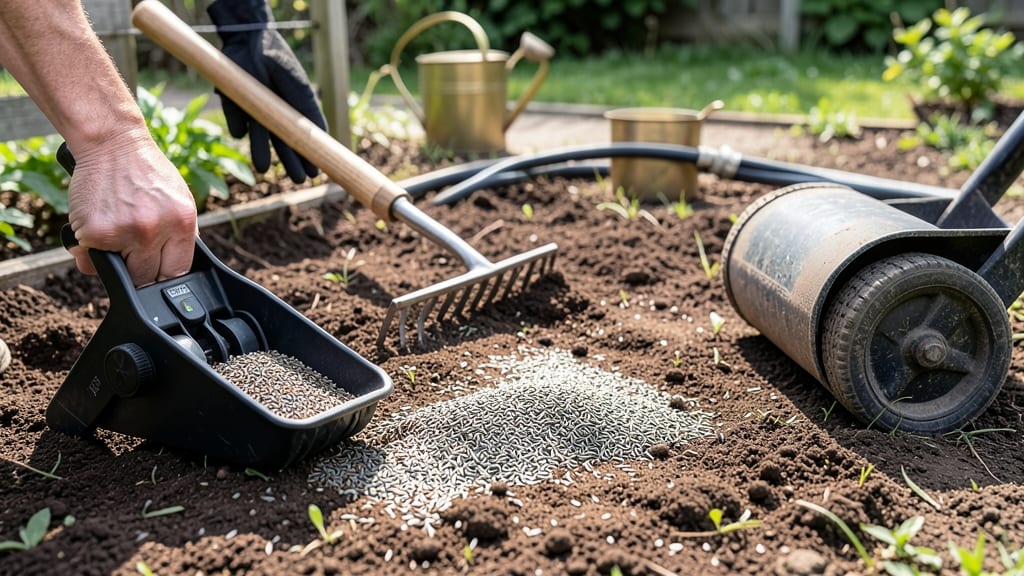
Autumn lawn seed sowing gives you a head start on spring's thickest, greenest grass. 🌱 The cooler temperatures and steady rains create perfect conditions for seeds to germinate and establish roots before winter—something spring planting can't match.
I've learned the hard way that timing is everything: sow too early, and weeds take over; too late, and frost zaps your efforts.
Start with a soil test to check pH—most grasses thrive between 6.0 and 7.0. Loosen the top 4-6 inches of soil with a rake or tiller, then level the area to eliminate bumps that could leave thin spots.
For best results, choose a cool-season grass blend suited to your climate, like fescue for northern regions or Bermuda for southern lawns.
After sowing, lightly rake the seeds into the soil and keep them moist with daily watering for the first two weeks. Once sprouts appear, reduce watering to 1-1.5 inches per week—deep but infrequent watering encourages strong root growth.
By late fall, you'll see a lush, uniform lawn that outcompetes weeds and survives winter better than spring-planted grass.
Regional adjustments matter: in colder climates, aim to finish sowing 4-6 weeks before the first frost; in warmer areas, extend the window until early winter. Avoid common mistakes like overseeding too thickly (it chokes seedlings) or using weed-and-feed before germination.
With these steps, you'll have a lawn that's the envy of the neighborhood by spring.
📚 In This Guide
- What you need
- Instructions
- Tips and common mistakes
- Wrapping up and next steps
What you need
- ● Lawn seed: Choose cool-season grass seed (e.g., Kentucky Bluegrass, Fescue, or Ryegrass) suited to your climate. Quantity: 5–10 lbs per 1,000 sq ft (follow package instructions for exact rates).
- ○ Soil test kit: Test your soil’s pH and nutrients (ideal pH: 6.0–7.0 for most grasses). Optional but recommended!
- ● Lime or sulfur: Adjust pH if needed (lime raises, sulfur lowers). Quantity: Follow soil test recommendations.
- ● Fertilizer: Use a low-nitrogen, high-phosphorus starter fertilizer (e.g., 10-20-10 ratio). Quantity: ½ lb per 100 sq ft.
- ● Rake: A bow rake (for leveling) and a garden rake (for seedbed prep).
- ○ Broadcast spreader: For even seed distribution. Optional: Hand-spreading works for small areas.
- ● Lawn roller: Lightweight (50–100 lbs) to press seed into soil.
- ● Water source: Hose with a fine mist nozzle or sprinkler system.
- ○ Mulching hay or straw: Optional but helpful: Light layer (¼ inch) to retain moisture and protect seeds.
- ● Seed tape or grid: For precise planting in tricky areas.
- ● Soil conditioner (compost or peat moss): Improves seedbed texture.
- ● Pre-emergent herbicide: Apply after seeding to prevent weeds (follow label timing!).
- ● Weatherproof cover: Protects seeds from heavy rain or birds if needed.
Step-by-Step instructions for sowing lawn seed in autumn
Here's how to plant your lawn this fall for roots that toughen up over winter and burst into spring growth.
🌱 Step 1: Prepare the Soil for Perfect Seed Contact
Start by mowing your existing grass as short as possible—this helps sunlight reach the soil and exposes any thatch buildup. Use a rake to loosen the top 1-2 inches of soil, breaking up any compacted areas. You'll know you're doing it right when the soil crumbles easily between your fingers instead of resisting.
Remove all debris, rocks, and clumps of thatch—these create barriers between seed and soil. For bare spots, lightly scratch the soil with a garden fork to create a rough, textured surface. This isn't about turning the soil over deeply; think of it as creating tiny pockets where seeds can nestle snugly. A soil test before planting helps too—autumn's the perfect time to amend with compost or starter fertilizer if needed.
💧 Step 2: Spread Seed Evenly for Uniform Germination
Divide your lawn seed into four equal portions—this makes spreading easier and ensures even coverage. Walk in a crisscross pattern, first one direction then perpendicular, to avoid missing spots. For large areas, use a broadcast spreader set to the recommended rate on the seed package. You're aiming for 10-15 seeds per square inch—don't skimp, but don't double up either.
I like to spread a little seed, then lightly rake it in with a stiff-bristled lawn rake. This ensures good seed-to-soil contact without burying them too deep. If you're overseeding an existing lawn, don't worry about perfect coverage—just focus on getting seed into the bare patches. Water gently after spreading to help settle everything in place.
☀️ Step 3: Water Consistently Until Germination
Keep the soil surface moist but never soggy for the first 2-3 weeks—this is critical for germination. Water lightly 2-3 times daily (early morning, late afternoon, and evening) using a sprinkler that delivers a fine mist. You'll see tiny green sprouts appear in 7-14 days, depending on temperature and seed type.
Once germination happens, gradually reduce watering to 1 inch per week total. Let the top inch of soil dry slightly between waterings to encourage deeper root growth. Avoid heavy foot traffic until the new grass reaches 3 inches tall—this prevents seedling damage and helps roots establish before winter.
✂️ Step 4: Maintain Through Winter for Spring Success
Leave new grass slightly taller going into winter—2-3 inches—to protect it from freezing temperatures. If snow covers your lawn, it actually provides insulation. In early spring, before new growth starts, apply a light layer of compost or slow-release fertilizer to feed those established roots.
Watch for weeds popping up in spring—they compete with your grass for nutrients. Hand-pull any weeds that appear before they go to seed. By late spring, your autumn-planted grass should be the thickest, greenest patch in the neighborhood. The key was giving those roots time to toughen up over winter while protecting them from stress.
Tips & tricks for perfect autumn lawn planting
Fall lawn planting rewards patience—these tricks help you avoid common mistakes and get the strongest possible start for spring.
Soil Prep Secret: After loosening the top 1-2 inches of soil in Step 1, sprinkle a thin layer of compost over the area before spreading seed. This adds nutrients directly where roots will grow, giving your new grass a head start. I like to work it in lightly with the back of my rake—just enough to mix it into the top half-inch without disturbing the seed pockets you created.
Seed Spreading Technique: For Step 2, if you don't have a broadcast spreader, try this: pour half your seed into a bucket, then walk in straight lines while sprinkling evenly. After completing the first pass, turn 90 degrees and repeat. This mimics the crisscross method without needing specialized equipment. Remember, those 10-15 seeds per square inch should look like a fine dusting—not clumps—when you're done.
Watering Wisdom: During the critical 2-3 week germination period in Step 3, I set a timer for my sprinkler to run for exactly 10 minutes each watering. This delivers the fine mist you need without over-saturating. Early morning watering (before 9 AM) prevents fungal growth, while evening watering helps seeds retain moisture overnight. The key is consistency—missed waterings mean missed germination opportunities.
Winter Protection Tip: When maintaining through winter in Step 4, consider leaving grass clippings on your lawn after mowing. They act as natural mulch, insulating roots from temperature swings. Just avoid thick piles that could smother new growth. And if you get heavy snowfall, gently brush snow off young grass—too much weight can damage tender seedlings.
Pro Tips for Sowing Lawn Seed In Autumn
- Fall lawn planting rewards patience—these tricks help you avoid common mistakes and get the strongest possible start ...
- Soil Prep Secret: After loosening the top 1-2 inches of soil in Step 1, sprinkle a thin layer of compost over the are...
- Seed Spreading Technique: For Step 2, if you don't have a broadcast spreader, try this: pour half your seed into a bu...
Frequently asked questions
Got questions about sowing lawn seed in autumn? You’re not alone! Here are some of the most common concerns—plus straightforward answers to help you prep like a pro.
Why is autumn the best time to sow lawn seed?
Autumn’s cooler temps and frequent rain give seeds the perfect conditions to germinate and establish roots before winter stress. Fewer weeds, lower water needs, and a head start on spring’s lush growth make it a win! Plus, seedlings avoid harsh summer heat or winter freezes.
How soon will I see results after sowing in autumn?
You’ll likely spot sprouts in 7–21 days, depending on seed type and weather. However, the real magic happens underground—roots strengthen over winter, so your lawn won’t peak until late spring or early summer. Patience pays off!
What if it rains right after I sow?
Great news—rain is your ally! Light, frequent showers (like autumn often brings) help seeds stay moist without over-saturating. Just avoid sowing right before a heavy downpour, which can wash seeds away. If needed, water gently afterward to settle them into the soil.
Can I overseed an existing lawn in autumn?
Autumn overseeding is ideal for filling thin spots. Mow your lawn short (1–1.5 inches), rake to loosen soil, and scatter seed lightly. Keep the area moist for 2–3 weeks. Just avoid overseeding if your lawn has fungal issues—wait until spring instead.
How do I protect new seeds from pests or birds?
Cover seeds with a thin layer of straw or peat moss to deter birds and keep soil moist. For grubs or insects, use a natural repellent (like neem oil) or a pre-sowing insecticide if your area is prone to pests. Avoid heavy mulch, which can smother sprouts.
Will my lawn survive a late autumn freeze?
Most cool-season grasses (like fescue or ryegrass) handle light frosts just fine! Just ensure seeds are germinated and rooted (about 4–6 weeks before first freeze). If snow covers the area, it’s like a cozy blanket—protecting tender shoots. Avoid walking on frost-covered lawns to prevent damage.
Wrapping up and next steps
Autumn is the perfect time to sow lawn seed—cooler temperatures, fewer weeds, and ample moisture create ideal conditions for cold-hardened roots that burst into vibrant spring growth. With the right prep, seed choice, and care, you’ll enjoy a thicker, greener lawn sooner than you think! 🌱
Ready to take the next step? Grab your supplies, mark your calendar for early fall planting, and watch your lawn transform. Happy sowing!