
Propagation
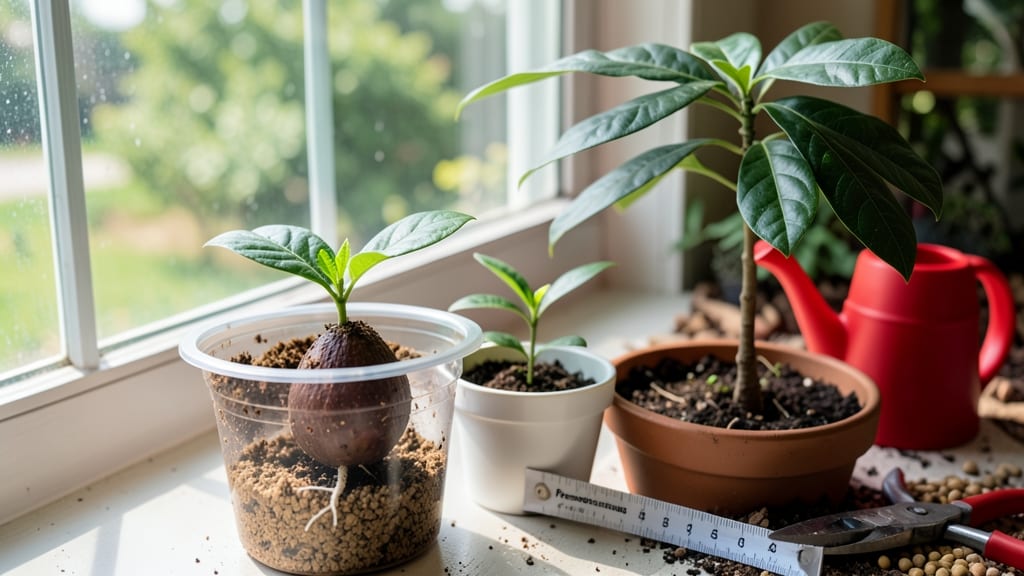
Growing an avocado from seed to fruit takes years, but the journey starts with a single pit and a glass of water. 🌱 The first green shoot you'll see in weeks could one day produce fruit—if you're patient enough.
I've watched my own seedling grow from a toothpick-thin sprout into a sturdy tree, and the process is simpler than you think, though it demands consistency.
You'll need just three things to begin: an avocado pit, a jar of water, and a sunny windowsill. The key is keeping the pit hydrated while roots form, then transplanting into soil when they're a few inches long.
Most people rush this step and end up with weak seedlings, but taking your time here means a stronger tree later. Within a year, you'll have a small plant that needs proper light, water, and occasional fertilizer to thrive.
By year three, your tree might start showing signs of maturity—longer leaves, thicker branches—but don't expect fruit for at least four years, and often much longer. The real magic happens when you see that first tiny avocado forming, a reward for years of care.
With proper pruning and patience, your tree could produce fruit for decades, becoming the centerpiece of your garden.
This isn't a quick project, but the satisfaction of growing something from nothing makes every step worthwhile. Whether you're a beginner or a seasoned gardener, the journey of watching an avocado tree mature is one of the most rewarding experiences in gardening. Let's get those roots growing!
📚 In This Guide
- What you need
- Instructions
- Tips and common mistakes
- Wrapping up and next steps
What you need
- ● Avocado seed: A fresh, organic avocado pit (preferably Hass variety) with a wide, flat end for planting.
- ● Water: Filtered or distilled water (chlorine-free) for soaking and hydration.
- ● Toothpicks or matches: 3-4 toothpicks or wooden matches to suspend the seed.
- ● Glass or jar: A clean, wide-mouth jar (16-20 oz) with a lid or plastic wrap for humidity.
- ● Potting mix: Well-draining, organic potting soil (avoid garden soil—it’s too dense!).
- ● Small pot (4-6 inches): With drainage holes for seedling growth.
- ● Larger pot (10-12 inches): For transplanting once roots establish (or a 5-gallon container for mature plants).
- ● Fertilizer: Balanced, organic fertilizer (e.g., 10-10-10 or compost tea) for nutrient boosts.
- ● Scissors or knife: For trimming toothpicks or cutting the seed base.
- ● Spray bottle: To mist leaves and maintain humidity.
- ○ Grow lights (optional): LED or fluorescent lights (12-16 hours/day) if natural light is limited.
- ○ Humidity dome (optional): For faster germination in cooler climates.
- ○ Thermometer (optional): To monitor soil temperature (ideal: 70–85°F).
- ○ Pruning shears (optional): For shaping the plant as it grows.
Step-by-step guide to growing avocados from seed to fruit
Here's how I turn a simple pit into a thriving houseplant that eventually bears fruit—no green thumb required.
🌱 Step 1: Germinate the Avocado Pit
First, wash the avocado pit thoroughly to remove any fruit residue, then dry it completely. I like to use three toothpicks to suspend the pit above a glass of water—position them so the pit floats with the wider end down and the pointed end up. The toothpicks should hold it steady without touching the sides of the glass.
Fill the glass with enough water to cover about 1 inch of the pit. Change the water every 2-3 days to prevent mold growth. Within 2-6 weeks, a small root will emerge from the bottom. Once the root reaches about 2 inches long, you'll see a sprout appear from the top. This is your signal to move to soil.
🪴 Step 2: Plant the Germinated Pit
Fill a 6-inch diameter pot with well-draining potting mix—avoid garden soil, which compacts and causes rot. I like to mix in a handful of perlite to improve drainage. Gently place your germinated pit into the soil so the root is covered but the sprout remains above the surface. Press the soil lightly around the pit to secure it.
Water the soil until it's evenly moist but not soggy. Place the pot in a location with bright, indirect light—a south-facing window works well, but avoid harsh midday sun, which can scorch young leaves. Keep the soil consistently moist, watering whenever the top inch feels dry to the touch.
☀️ Step 3: Care for the Young Seedling
As your avocado grows, it will develop its first true leaves—these are the second set after the initial sprout. Once you see these, increase sunlight exposure gradually, moving the plant to a spot with 4-6 hours of morning sun daily. Avocados need light but can burn easily, so I rotate the pot weekly to encourage even growth.
Fertilize lightly every 2-3 months with a balanced, water-soluble fertilizer diluted to half-strength. Over-fertilizing can harm young plants, so less is always better. Watch for yellowing leaves, which usually means the plant needs more light or less water.
🌿 Step 4: Encourage Fruit Production
Avocado trees grown from seed rarely bear fruit indoors, but with patience and the right conditions, it’s possible. Once your tree reaches 5-6 feet tall (which can take 5-10 years), it may produce flowers. To encourage fruit, place the tree near a window with full sun exposure for at least 6 hours daily.
If your tree flowers, hand-pollinate by gently transferring pollen from one flower to another using a small paintbrush. Keep the soil consistently moist but not waterlogged, and maintain a temperature between 60-80°F. Fruit development can take 6-12 months, so be patient—your efforts will pay off with a unique, homegrown avocado!
⏰ Step 5: Prune and Maintain for Long-Term Growth
Prune your avocado tree regularly to remove dead or yellowing leaves and encourage a bushier shape. Use clean, sharp pruning shears to cut just above a leaf node. I prune in early spring to shape the tree and remove any branches growing inward or crossing over others.
Repot your avocado every 2-3 years or when roots begin circling the pot. Choose a pot only 1-2 inches larger in diameter than the current one—avocados prefer being slightly root-bound. This encourages stronger growth and fruit production. With proper care, your avocado tree can live for decades and eventually reward you with fruit!
Tips & tricks for growing avocado trees from seed
Here's what I wish I knew when I first started growing avocados from seed—these tricks make all the difference between a thriving plant and a sad, stunted one.
The Water Level Secret: When germinating your pit, keep the water level just right—about 1 inch covering the bottom. Too much water can cause mold, while too little might slow root growth. I like to use a clear glass so I can easily monitor the water level and root progress without disturbing the pit.
Soil Mix Matters: In Step 2, don't just grab any potting mix—look for one labeled "well-draining" and mix in perlite (about 1 part perlite to 4 parts soil). This prevents soggy soil that can rot your young roots. I've seen beginners use regular garden soil, which compacts and suffocates the plant.
Light Transition Tip: When moving your seedling from bright indirect light to morning sun in Step 3, do it gradually. Start with just 1-2 hours of morning sun per day, then increase by 30 minutes every few days. Sudden full sun exposure can scorch delicate new leaves, and I've seen this happen to more plants than I'd like to admit.
Fertilizer Timing: Wait until you see those first true leaves (the second set after the initial sprout) before fertilizing. Young plants can't handle fertilizer until they have enough leaves to support new growth. I use a balanced, water-soluble fertilizer diluted to half-strength every 2-3 months, but I've seen people overdo it and end up with fertilizer burn.
Pro Tips for Avocado From Seed To Fruit
- Here's what I wish I knew when I first started growing avocados from seed—these tricks make all the difference between a thriving plant and a sad, stunted one.
- The Water Level Secret: When germinating your pit, keep the water level just right—about 1 inch covering the bottom.
- Soil Mix Matters: In Step 2, don't just grab any potting mix—look for one labeled "well-draining" and mix in perlite (about 1 part perlite to 4 parts soil).
Frequently asked questions
Got questions about growing avocados from seed to fruit? You’re not alone—this process can feel like a slow-motion adventure! Below, we tackle the most common curiosities, from patience-testing timelines to troubleshooting pitfalls. Let’s dive in.
How long does it take for an avocado seed to grow into a fruit-bearing tree?
A seed-grown avocado tree typically takes 5–13 years to produce fruit, depending on variety, climate, and care. The first few years focus on root and trunk development—patience is key! Pro tip: Dwarf varieties (like ‘Wurtz’) may fruit sooner (3–5 years) but require grafting for consistency.
Can I grow an avocado indoors? Will it ever bear fruit?
Yes, but fruit production is unlikely indoors. Avocados thrive in USDA Zones 9–11 with full sun. Indoors, they’ll grow as houseplants (great for humidity-loving spaces!) but need a sunny windowsill and occasional outdoor time in warm months. For fruit, transplant outdoors in a warm climate.
Why isn’t my avocado seed sprouting? What am I doing wrong?
Common culprits: rotting seeds (overwatering), dry seeds (not enough moisture), or improper planting (too deep). To fix:
- Use lukewarm water (not cold) for soaking.
- Plant the seed half-submerged in moist soil, with the top exposed.
- Keep soil consistently damp, not soggy.
Do I need to graft my avocado tree for better fruit?
Grafting isn’t mandatory, but it’s highly recommended for fruit quality and consistency. Seed-grown trees often produce small, inconsistent fruit or none at all. Grafting onto a known variety (like Hass or Fuerte) ensures better yields. Pro tip: Wait until your tree is 1–2 years old and has a trunk diameter of at least ½ inch for grafting.
What’s the best climate for growing avocados from seed?
Avocados love warmth, humidity, and frost-free conditions. Ideal climates:
- Outdoors: Zones 9–11 (California, Florida, Hawaii).
- Indoors/Containers: Bright, indirect light (east/west windows) and temps above 50°F (10°C).
Can I eat the fruit from a seed-grown avocado tree?
Technically yes, but the fruit may be small, seedy, or bland compared to grafted varieties. Seed-grown trees are not bred for flavor or size. For reliable, delicious avocados, graft your tree or buy a nursery-grown one. Fun fact: Even “wild” avocados can be creamy—just expect a surprise texture!
Wrapping up and next steps
Growing avocados from seed to fruit is a rewarding journey that blends patience, care, and a touch of green-thumb magic! 🌱 From sprouting your seed to nurturing a thriving tree, every step—like consistent watering, pruning, and sunlight exposure—plays a role in your success.
While it may take years to harvest fruit, the process itself is a daily reminder of nature’s resilience.
Now that you’re armed with the knowledge, why not plant your first seed today? Share your progress with fellow plant enthusiasts or experiment with different varieties—your avocado adventure is just beginning! 🌟