Propagation
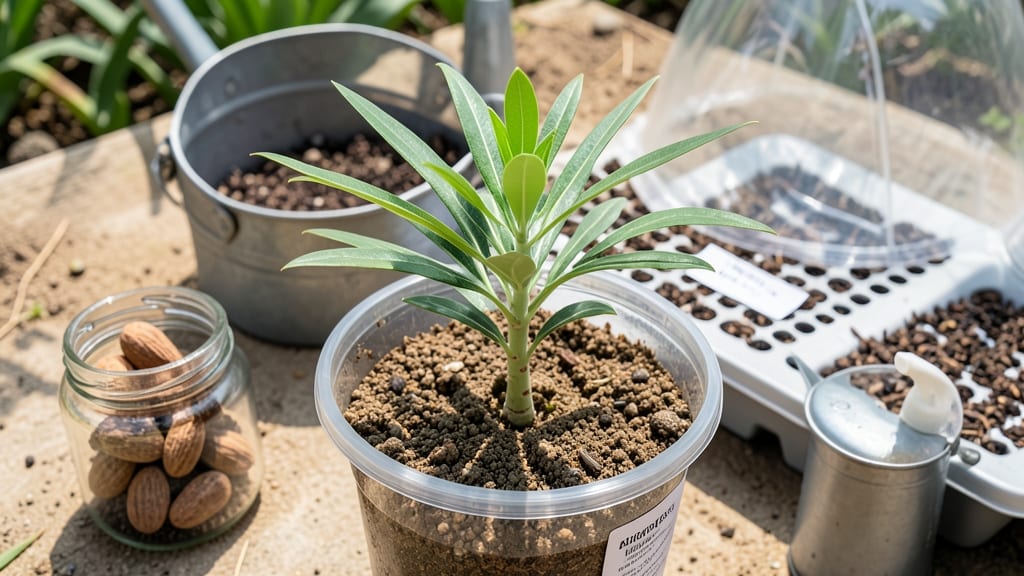
Eucalyptus seed propagation turns those frost-toughened blooms into thriving seedlings with surprising ease. 🌱 I’ve watched eucalyptus trees push through frost only to reward me with seeds that hold the promise of new growth—if you know how to coax them along. The key lies in timing, soil prep, and creating the right conditions for those tiny seeds to wake up and grow.
Start with fresh seeds straight from the pods—stored properly, they’ll stay viable for months. You’ll need a well-draining mix (equal parts perlite, peat, and sand) and a warm spot with bright, indirect light.
Germination can take 2-4 weeks, but patience pays off when those first green shoots push through the soil.
Once sprouted, keep humidity high with a plastic dome or spray bottle, and avoid overwatering—eucalyptus seedlings hate soggy roots. In 60 days, you’ll have sturdy young plants ready for transplanting, their glossy leaves signaling success.
This method works for all eucalyptus varieties, from towering gum trees to compact dwarf types. The secret? Mimicking their natural environment—just like they’d grow in the wild, but with a little extra care from you.
📚 In This Guide
- What you need
- Instructions
- Tips and common mistakes
- Wrapping up and next steps
What you need
- ● Eucalyptus seeds: Fresh, cold-stressed seeds (harvested after flowering). Aim for 50–100 seeds for a small batch.
- ● Seed-starting mix: A well-draining, sterile potting mix (e.g., 50% peat moss + 50% perlite or vermiculite). Avoid garden soil—it can harbor pests or diseases.
- ● Seed trays or small pots: 2–4 inch deep containers with drainage holes. Use 6–12 cell trays for organized planting.
- ○ Clear plastic domes or plastic wrap: To create a humid microclimate (optional but highly recommended for germination).
- ● Spray bottle: For gentle watering (avoid over-saturation).
- ● Grow lights or sunny windowsill: Eucalyptus seeds need bright, indirect light (6–8 hours/day). A LED grow light works well if natural light is limited.
- ○ Heat mat (optional but helpful): Maintains soil temperature at 70–75°F (21–24°C) to speed up germination.
- ● Fertilizer (after germination): A balanced, water-soluble fertilizer (e.g., 10-10-10) diluted to half-strength once seedlings sprout 2–3 sets of leaves.
- ● Seed scarification tools: Sandpaper (fine-grit, 220–320 grit) or a knife to nick seeds if they’re tough-coated.
- ● Fungicide: A mild solution (e.g., hydrogen peroxide 3%) to prevent damping-off in humid conditions.
- ● Humidity tray: A shallow tray with pebbles and water to boost moisture levels around seedlings.
- ● pH test kit: Ensures your soil is slightly acidic (pH 5.5–6.5) for optimal germination.
- ● Labeling tags: To track seed varieties and planting dates.
Step-by-Step instructions for eucalyptus seed propagation
Turn those cold-hardened eucalyptus blooms into thriving seedlings with this precise, foolproof method.
🌱 Step 1: Collect and Prepare Mature Eucalyptus Seeds
Harvest seeds only from fully mature capsules—these will be the dry, brown pods that split open naturally. Gently twist them off the stems and place them in a paper bag for 2-3 weeks to complete drying at room temperature. This mimics the natural process and ensures maximum viability.
Once dry, open the capsules by hand and sift through the seeds to remove any chaff or empty husks. Eucalyptus seeds are tiny, so I use a fine-mesh sieve and a soft paintbrush to separate them. Store the clean seeds in a sealed container in a cool, dark place until ready to sow—this prevents premature germination.
💧 Step 2: Stratify Seeds for Germination Success
Eucalyptus seeds require a cold stratification period to break dormancy. Place the seeds in a sealed plastic bag with slightly damp sand or perlite (enough to cover them completely). I use a 1:1 ratio of sand to seeds by volume—this keeps them evenly moist without waterlogging.
Refrigerate the bag for 4-6 weeks, checking monthly to ensure the medium remains damp but not soggy. The cold treatment mimics winter conditions and signals the seeds that it’s time to germinate. Once stratification is complete, you’ll see the first signs of root development—this is your cue to move to the next step.
☀️ Step 3: Sow Seeds in a Controlled Environment
Fill small seed trays or individual pots with a well-draining seed-starting mix—eucalyptus hates soggy roots. Press the mix lightly into the tray to remove air pockets, then create shallow furrows ¼ inch deep with a toothpick. Scatter the stratified seeds thinly along the furrows, spacing them ½ inch apart to avoid overcrowding.
Cover the seeds with a thin layer of the same mix, then mist gently with water until the surface is evenly damp. Place the tray in a warm, bright location (around 70-75°F) with indirect light—direct sun can overheat the soil and inhibit germination. A seedling heat mat helps maintain consistent warmth if your home runs cooler.
🌿 Step 4: Monitor and Transplant Young Seedlings
Germination typically takes 2-4 weeks, but be patient—some seeds may take longer. Once the first true leaves appear (not the initial cotyledons), remove the humidity dome if you used one. Eucalyptus seedlings are delicate, so water from the bottom of the tray to avoid disturbing the soil surface.
When seedlings reach 2-3 inches tall and have developed 3-4 sets of true leaves, it’s time to transplant. Choose individual pots with drainage holes and fill them with a light, airy potting mix. Handle the seedlings by their leaves, not the stems, to prevent damage. Transplant on an overcast day to reduce stress.
⏰ Step 5: Acclimate and Transition to Outdoor Conditions
Before moving seedlings outdoors, harden them off over 10-14 days. Start by placing them in a shaded, sheltered spot for 1 hour daily, gradually increasing exposure to sunlight and wind. This slow transition prevents shock and helps the seedlings adjust to outdoor conditions.
Once hardened off, choose a location with full sun exposure and well-draining soil. Eucalyptus thrives in USDA Zones 8-11, so if you’re in a cooler climate, plant in a large container that can be moved indoors during winter. Water deeply after transplanting to encourage root establishment, then maintain consistent moisture without waterlogging.
Tips & tricks for perfect eucalyptus seed propagation
Mastering eucalyptus seed propagation takes patience and precision—here's how to avoid common pitfalls and maximize your success rate.
Seed Selection: In Step 1, focus on harvesting only the fully mature capsules—they'll be the dry, brown pods that naturally split open when gently twisted. Immature pods are green and won't yield viable seeds. I've learned the hard way that even a few immature seeds mixed in can ruin an entire batch by causing mold during stratification.
Stratification Strategy: During the 4-6 week cold stratification in Step 2, I recommend placing your sealed bag in the crisper drawer of your refrigerator rather than the main compartment. This maintains more consistent 35-40°F temperatures that eucalyptus seeds prefer for dormancy breaking. Check monthly by gently squeezing the bag—it should feel like a damp sponge, not a soggy washcloth.
Germination Environment: For Step 3, position your seed trays near a south-facing window but not in direct sunlight. I use a small LED grow light on a timer (14 hours on/10 hours off) to supplement natural light, especially in winter months. The 70-75°F range is critical—too cold and germination stalls, too hot and seeds may dry out before sprouting.
Transplanting Timing: When transplanting in Step 4, wait until seedlings have developed 3-4 sets of true leaves before moving them to individual pots. This ensures they have enough energy reserves to handle the stress of transplanting. I've found that seedlings with fewer leaves often struggle and may not recover, even with careful handling.
Pro Tips for Eucalyptus Seed Propagation
- Mastering eucalyptus seed propagation takes patience and precision—here's how to avoid common pitfalls and maximize your success rate.
- Seed Selection: In Step 1, focus on harvesting only the fully mature capsules—they'll be the dry, brown pods that naturally split open when gently twisted.
- Stratification Strategy: During the 4-6 week cold stratification in Step 2, I recommend placing your sealed bag in the crisper drawer of your refrigerator rather than the main compartment.
Frequently asked questions
Got questions about growing eucalyptus from seed? You’re not alone—this method takes patience and precision! Below, we’ve rounded up the most common queries to help you navigate the process like a pro.
How long does it take for eucalyptus seeds to germinate?
Germination can take anywhere from 10 days to 3 months, depending on the species and conditions. Most seeds sprout within 4–8 weeks if kept in a warm (70–75°F), moist environment. Cold-stratification (chilling seeds for 6–8 weeks) often speeds up the process for stubborn varieties.
Can I propagate eucalyptus from seeds collected straight from the tree?
Freshly collected seeds can germinate, but they often have lower viability. Store them in a cool, dry place (like a paper envelope) for 1–2 weeks to dry slightly before sowing. For best results, stratify them first—this mimics winter conditions and breaks dormancy.
What’s the best soil mix for eucalyptus seed propagation?
Use a light, well-draining mix like:
- 50% peat moss or coco coir (for moisture retention)
- 30% perlite or coarse sand (for aeration)
- 20% compost or worm castings (for nutrients)
Why aren’t my eucalyptus seeds sprouting? Troubleshooting tips.
If your seeds refuse to germinate, check these common culprits:
- Old seeds: Eucalyptus seeds lose viability quickly—use them within 6–12 months of collection.
- Wrong temperature: Too cold (<60°F) or too hot (>85°F) can stall germination. Use a seedling heat mat if needed.
- Poor moisture: Keep soil consistently damp (not soggy) with a spray bottle.
- Lack of light: Once sprouted, move seedlings to bright, indirect light (no direct sun yet!).
Is it easier to grow eucalyptus from cuttings instead of seeds?
Yes! Cuttings (4–6 inches long) often root faster (2–4 weeks) and retain the parent plant’s traits. For seeds, you’ll deal with slower growth and genetic variability (seedlings may not match the parent tree’s appearance). If you want predictable results, cuttings are the way to go—but seeds are cheaper and more fun for beginners!
Wrapping up and next steps
Propagating eucalyptus from seed is a rewarding journey that transforms cold-stressed blooms into thriving plants in just 60 days! With the right materials, patience, and care, you’ve unlocked the secrets to nurturing these resilient trees from scratch.
Whether you’re a gardening novice or a seasoned green thumb, every tiny seed holds the potential for a towering, aromatic future.
Now that you’re armed with knowledge, it’s time to take action! Start by gathering your supplies, follow the steps with confidence, and watch your eucalyptus seeds sprout into something extraordinary. Happy growing—your garden (and future pollinators!) will thank you. 🌱✨