Lawn
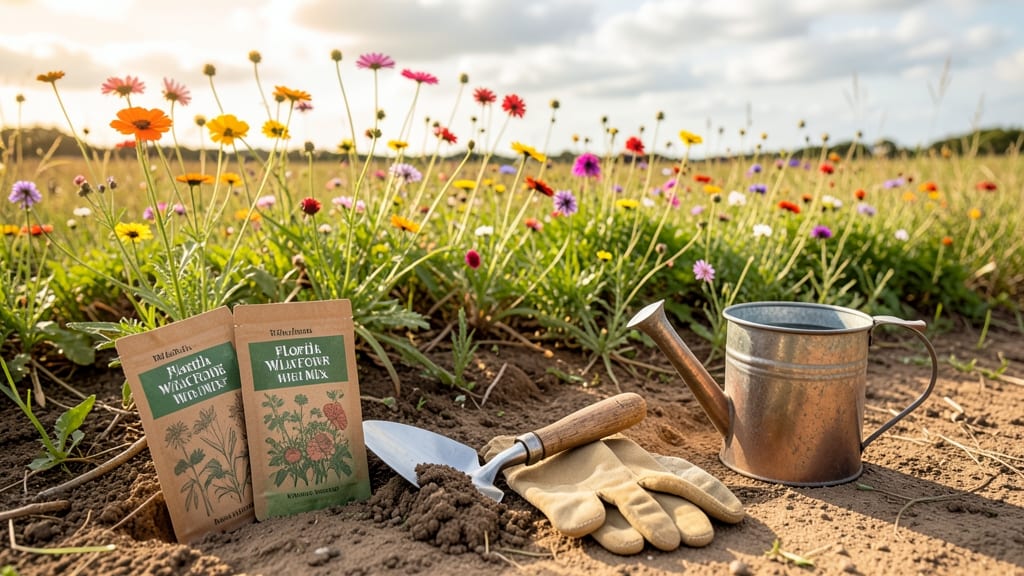
A Florida wildflower seed mix transforms your yard into a buzzing pollinator paradise with almost no effort. 🌻 I planted mine last October, and by spring, the blooms attracted hummingbirds, butterflies, and bees—something my manicured lawn never did. The magic happens in Florida’s mild winters and warm springs.
You’ll need a sunny spot (6+ hours of light), loose soil, and a light raking to scatter seeds. Water gently for the first two weeks, then let nature take over. Most varieties reseed themselves, meaning fewer chores and more color every year.
What you end up with is a low-maintenance garden that thrives in Florida’s heat and humidity. The flowers stay vibrant from late winter through fall, and the ecosystem benefits are huge—native bees, monarchs, and other pollinators will thank you.
This works for any sunny Florida yard, from small patches to large landscapes. Here’s how to get started without the fuss!
📚 In This Guide
- What you need
- Instructions
- Tips and common mistakes
- Wrapping up and next steps
What you need
- ● Florida Wildflower Seed Mix: 1–5 lbs (depending on area size; ~1 lb covers ~100 sq. ft. for sparse coverage or ~50 sq. ft. for dense planting). Choose a mix with native species like Black-Eyed Susan, Coreopsis, and Blanket Flower for resilience and pollinator appeal.
- ● Preparation Soil: Topsoil or native soil mix (avoid heavy clay; amend with compost if needed for better drainage).
- ● Watering System: Hose with a gentle spray nozzle or drip irrigation (critical for the first 2–3 weeks post-planting).
- ● Rake: Bow rake or garden cultivator (for loosening soil and creating a fine seedbed).
- ○ Broadcast Spreader: Handheld or walk-behind (optional but ideal for even seed distribution).
- ● Garden Gloves: Durable, breathable pair (to protect hands from prickly stems or debris).
- ○ Straw or Mulch: Lightweight mulch (e.g., straw or pine needles) (optional; helps retain moisture and deter erosion).
- ● Location: Choose a sunny spot (6+ hours of sunlight daily) with well-draining soil. Avoid areas prone to flooding.
- ● Timing: Plant in early fall (Sept–Nov) or late winter (Feb–March) to align with Florida’s natural rain cycles.
- ● Prep Work: Clear existing grass/weeds (use a solarization method or glyphosate if needed) and rake the soil smooth.
- ● Pollinator-Friendly: Skip pesticides/herbicides post-planting—wildflowers thrive with bees, butterflies, and hummingbirds!
How to plant a Florida wildflower seed mix for year-round blooms
Skip the high-maintenance garden—Florida wildflowers thrive with almost no fuss once you get the basics right.
🌱 Step 1: Choose and Prepare Your Planting Site
Wildflowers love full sun, so pick a spot that gets at least 6 hours of direct sunlight daily. I always check for shade patterns around midday—what looks sunny in the morning might get blocked by trees by noon. Clear any existing weeds or grass in a 12-inch square area per packet, since competition will choke out your wildflowers.
Loosen the top 2-3 inches of soil with a rake or garden fork. Wildflowers don’t need rich soil—they’re adapted to Florida’s sandy, nutrient-poor conditions. If your soil is especially hardpan, mix in a thin layer of compost to help water penetrate, but don’t overdo it. Too much organic matter can make the seeds rot before they sprout.
💧 Step 2: Scatter Seeds and Lightly Cover
Open your wildflower seed mix and spread the seeds evenly over the prepared area. I like to use a simple trick: pour half the packet into my hand, then sprinkle it while walking away from the site. This creates a natural, uneven distribution—just like nature would. For a 10x10 foot area, one packet usually covers it perfectly.
After scattering, lightly rake the soil to cover the seeds with just ¼ inch of dirt. Press them in gently—you want them buried enough to protect from birds but not so deep they can’t push through. A light misting with water is all they need at this stage. Overwatering now will wash seeds away or create a soggy crust that prevents germination.
☀️ Step 3: Water and Wait for Germination
Keep the soil consistently moist but not soggy for the first 2-3 weeks. Water deeply in the morning so the soil surface dries slightly by evening—this prevents fungal diseases that love damp conditions. You’ll know you’re doing it right when the soil feels damp 1 inch down but doesn’t puddle on top.
Germination can take 7-30 days, depending on the mix and weather. Some seeds, like coreopsis, pop up quickly, while others, like black-eyed Susans, might take longer. Don’t be tempted to disturb the soil or water heavily once sprouts appear—you’ll risk washing away tiny seedlings. Once they’re 1-2 inches tall, you can let them go mostly on their own.
✂️ Step 4: Maintain with Minimal Effort
Wildflowers thrive on neglect, but they do need occasional attention. Once established, water only during dry spells—let the soil go completely dry between waterings. This encourages deep root growth and drought tolerance. I usually check by sticking my finger 2 inches into the soil; if it feels dry, it’s time to water.
Let the flowers go to seed at the end of the season—they’ll self-sow and spread naturally. If any weeds pop up, pull them when they’re small (before they steal sunlight from your wildflowers). Deadhead spent blooms if you want continuous color, but honestly, I often skip this—wildflowers are tough and bounce back year after year with almost no help.
Tips & tricks for perfect Florida wildflower planting
Here's what nobody tells you about getting your wildflower garden to thrive with almost no effort.
Sunlight Strategy: That 6-hour sunlight minimum is non-negotiable—Florida wildflowers won't bloom without it. I've planted in spots that seemed sunny only to have them fail after a few weeks. Use a simple trick: Observe your yard at midday (around 1-2 PM) when shadows are shortest. If you see any shade creeping in during this time, mark that spot as unsuitable. Morning sun alone won't cut it.
Soil Prep Secret: The top 2-3 inches of soil is all that matters for these tough plants. I've seen gardeners go overboard with compost, thinking more is better. Too much organic matter creates a damp environment that can actually rot seeds before they sprout. If your soil is hardpan, just mix in a thin layer of compost—about ½ inch—to help water penetrate without smothering the seeds.
Watering Wisdom: Those first 2-3 weeks are critical for consistent moisture, but timing matters just as much as quantity. I water deeply in the morning so the soil surface can dry slightly by evening. This prevents fungal diseases that love damp conditions. You'll know you're doing it right when the soil feels damp 1 inch down but doesn't puddle on top—like a wrung-out sponge.
Germination Patience: The 7-30 day germination window can feel like forever, especially when you're eager to see results. Here's what I've learned: Some seeds like coreopsis pop up quickly, while others like black-eyed Susans take their time. The key is patience—don't disturb the soil or water heavily once sprouts appear. Tiny seedlings are fragile and can be washed away with too much enthusiasm.
Pro Tips for Florida Wildflower Seed Mix
- Here's what nobody tells you about getting your wildflower garden to thrive with almost no effort.
- Sunlight Strategy: That 6-hour sunlight minimum is non-negotiable—Florida wildflowers won't bloom without it.
- Soil Prep Secret: The top 2-3 inches of soil is all that matters for these tough plants.
Frequently asked questions
Got questions about transforming your Florida landscape with wildflower seed mixes? You’re not alone! Here are some of the most common queries—and straightforward answers—to help you get started with confidence.
When is the best time to plant Florida wildflower seeds?
The ideal window is late summer to early fall (August–October), when soil is warm and rainfall is plentiful. This timing mimics natural conditions, giving seeds the best chance to germinate before winter. For spring planting, aim for February–March, but expect slower growth until summer rains arrive.
How long does it take for wildflowers to bloom after planting?
Most Florida wildflower mixes take 6–12 weeks to germinate, with blooms appearing as early as 8–10 weeks post-planting. Some varieties (like coreopsis or black-eyed Susans) may surprise you with color in just 6–8 weeks, while others, like milkweed, take a bit longer. Patience pays off—full seasonal color typically arrives by late spring!
Do I need to water my wildflower seeds daily?
Nope! Overwatering can drown seeds. Instead, keep soil consistently moist (not soggy) for the first 2–3 weeks—about ¼ inch of water per week. After germination, reduce watering to 1–2 times per week (or rely on natural rainfall). Once established, wildflowers thrive with Florida’s humidity and occasional showers.
Will wildflowers attract bees or other pests?
Absolutely—but that’s a good thing! Wildflowers are pollinator magnets, supporting bees, butterflies, and hummingbirds. To minimize pests, avoid chemical pesticides. If invasive species (like palmetto) encroach, hand-pull them early. Most native wildflowers are low-maintenance and cohabit peacefully with Florida’s ecosystem.
Can I mix wildflower seeds with grass seed?
Yes! Many gardeners blend wildflower seeds (10–20% of the mix) with grass seed for a low-maintenance, colorful lawn. Just ensure your grass variety is shade-tolerant (like bahia or centipede) if planting under trees. For full-sun areas, a 50/50 split works well. Pro tip: Use a starter fertilizer to help both seeds establish.
What if my wildflowers don’t grow back every year?
Some annual wildflowers (like cosmos or zinnias) reseed naturally, while perennials (like butterfly weed) return yearly. If your patch thins, lightly rake in spring to disturb soil and encourage regrowth. Deadhead spent blooms to redirect energy to roots. For bare spots, scatter fresh seeds in fall—wildflowers are resilient!
Wrapping up and next steps
Transforming your Florida landscape into a vibrant, low-maintenance wildflower haven is easier than you think!
With the right Florida wildflower seed mix, you’re not just adding beauty—you’re supporting local ecosystems and reducing water usage. 🌸 Whether you’re a seasoned gardener or a beginner, these resilient blooms will reward you with year-round color while keeping upkeep simple.
Ready to take the next step? Start small—try a patch in your yard or a container garden—and watch your space flourish with minimal effort. Happy planting! 🌿