Container Gardens
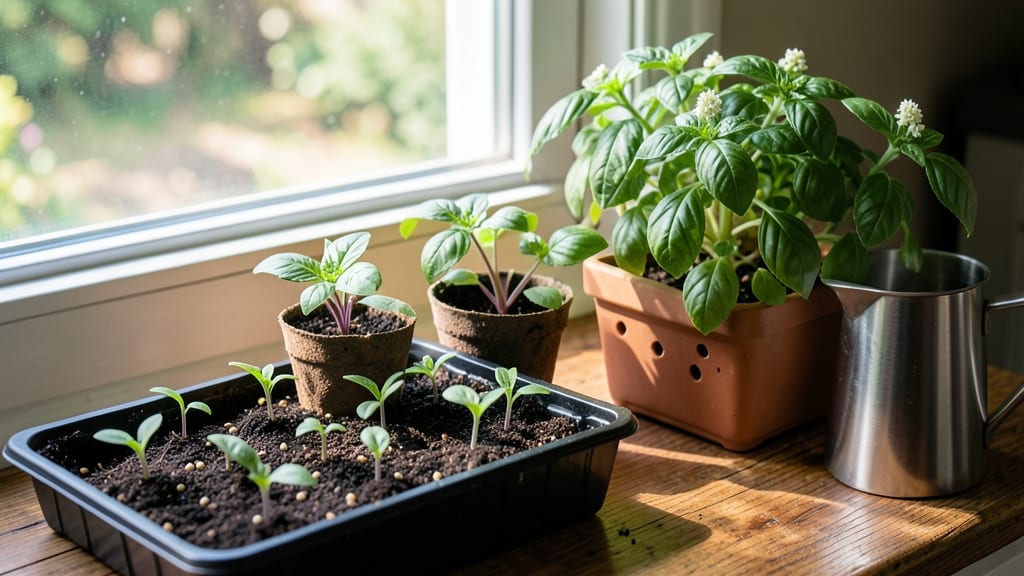
Growing basil from seed in containers means fresh, fragrant herbs on your windowsill or balcony—no yard required. 🌱 I’ve grown basil this way for years, and the secret isn’t fancy equipment but matching the plant’s needs to your space.
The right container, soil, and light can turn a tiny pot into a productive herb factory.
Start with a 4-6 inch container (basil roots stay compact) and drainage holes—no soggy soil, no wilting plants. Use well-draining potting mix, not garden soil, and plant seeds just ¼ inch deep.
Place them in a sunny spot (at least 6 hours of light daily), and keep the soil moist but never soggy. In 2-3 weeks, you’ll see those first true leaves.
By late spring, your basil will be lush and ready to harvest, with a flavor that beats store-bought herbs. Pinch back the tops to encourage bushier growth, and harvest leaves regularly to keep it productive.
The best part? You’ll never need to buy basil again—just keep it happy with consistent light and water.
Works for apartments, patios, or even kitchen counters. If your basil starts to flower, snip those buds—they make the leaves bitter. With these simple steps, you’ll have zero-fuss basil that thrives in any container. Ready to grow?
📚 In This Guide
- What you need
- Instructions
- Tips and common mistakes
- Wrapping up and next steps
What you need
- ● Basil seeds: 1 packet (about 50-100 seeds, depending on the variety)
- ● Containers: 2-4 small pots (4-6 inches deep) with drainage holes or a single larger container (8+ inches deep) for multiple plants
- ● Potting mix: 2-3 cups of high-quality, well-draining seed-starting mix (avoid garden soil)
- ● Watering can or spray bottle: With a fine mist setting
- ● Grow lights or sunny windowsill: A south-facing window (6+ hours of sunlight) or a 12-16 inch LED grow light for indoor setups
- ○ Plastic wrap or humidity dome: To retain moisture (optional but helpful for germination)
- ● Seedling heat mat: (70-75°F) to speed up germination
- ● Fertilizer: Balanced liquid fertilizer (5-5-5 or 10-10-10) for transplanting
- ● Plant labels: To track varieties (especially if growing multiple types)
- ● Pruning shears: For harvesting and shaping plants
- ● Container trays or saucers: To catch excess water
Instructions for growing basil from seed in containers
Here's how to coax fragrant basil from tiny seeds into lush, productive plants.
🌱 Step 1: Prepare Containers and Seed Starting Mix
Start with 4-inch diameter pots or a single shallow tray with drainage holes—basil roots spread wide but don't dive deep. I fill each container with a mix of 50% potting soil and 50% perlite to prevent compaction. Moisten the mix until it feels like a damp sponge, squeezing gently to check moisture without leaving it soggy.
Press the soil down lightly so it's firm but not packed. This creates a stable foundation for the delicate seedlings. I like to make a small indentation with my finger—just enough to cradle the tiny seeds without burying them too deep. Basil seeds are so small they need light to germinate, so planting them too deeply will delay sprouting.
🌱 Step 2: Sow Seeds and Maintain Ideal Germination Conditions
Sprinkle 2-3 seeds per container directly into the indentation, spacing them about ½ inch apart. Cover them with a thin layer of soil no deeper than ¼ inch. Mist the surface lightly with water until it looks uniformly damp—you want the soil to be moist but not glistening.
Cover the container with a clear plastic dome or wrap it in plastic wrap to create a mini greenhouse. Basil seeds germinate best at 70-75°F, so place the container on a seedling heat mat if your home runs cooler. Check daily for condensation on the plastic—this tells you the humidity is right. Germination takes 7-14 days, so be patient and resist the urge to peek too often.
☀️ Step 3: Provide Bright Light and Prevent Leggy Growth
The moment you see the first true leaves (those are the second set—ignore the initial cotyledons), remove the plastic cover immediately. Basil seedlings need 6+ hours of bright light daily to prevent them from stretching toward any available light source. Place them within 4 inches of a south-facing window or under a grow light set to 14-16 hours per day.
Rotate the containers a quarter turn daily so the plants grow straight rather than leaning toward the light. You'll know the light is sufficient when the seedlings develop deep green leaves and sturdy stems. If they look pale and leggy, move them closer to the light source or increase the grow light's intensity.
💧 Step 4: Water and Fertilize for Strong Growth
Water the seedlings when the top inch of soil feels dry to the touch. I use a spray bottle for the first week to avoid disturbing the soil, then switch to a watering can with a gentle stream. Always water at the base of the plants to keep the leaves dry—wet foliage invites fungal diseases. After the first set of true leaves appears, fertilize lightly with a balanced liquid fertilizer diluted to half strength.
Basil thrives in slightly acidic soil, so I add a pinch of cottonseed meal to the potting mix for a slow-release nitrogen boost. Watch for signs of over-fertilizing, like yellowing leaves or stunted growth. If you see these, flush the soil with plain water to leach out excess salts. Once the seedlings reach 3-4 inches tall, thin them to the strongest plant per container.
✂️ Step 5: Prune and Harvest for Continuous Production
Pinch off the top set of leaves when the plant reaches 6 inches tall to encourage bushier growth. This might seem counterintuitive, but it stimulates the plant to produce more side shoots, resulting in a fuller, more productive basil plant. Regular pruning also prevents the stems from becoming woody and tough.
Start harvesting leaves from the bottom up when the plant is 8-10 inches tall. Use clean scissors to snip just above a leaf node, and avoid taking more than ⅓ of the plant at once. This encourages new growth while keeping the plant healthy. With consistent care, your basil will keep producing fresh leaves for months, providing you with a steady supply of flavorful herbs for your kitchen.
Tips & tricks for perfect container-grown basil
These zero-fuss strategies will help you coax vigorous basil plants from tiny seeds without the guesswork.
Soil Texture Matters: The 50% potting soil and 50% perlite mix in Step 1 isn't just about drainage—it's about creating the perfect air-to-moisture balance for basil's shallow roots. I've found that adding a handful of coco coir to the mix (optional) improves moisture retention without compacting. Press the soil firmly enough so it holds its shape when you gently squeeze it, but don't pack it like dirt for a brick—this prevents oxygen deprivation that stunts seedling growth.
Germination Secret: That 70-75°F temperature range in Step 2 is non-negotiable for consistent germination. If your home runs cooler, place containers on a seedling heat mat or even a sunny windowsill with a small space heater nearby. Pro tip: Use a thermometer to monitor soil temp—basil seeds won't sprout reliably below 68°F. The condensation check on the plastic is your humidity gauge: if it's dry inside, mist lightly; if it's dripping, remove the cover for 30 minutes to prevent mold.
Light Strategy: The 6+ hours of bright light in Step 3 is your minimum, but don't stop there. Basil thrives on 12-14 hours of light daily once seedlings emerge. If using a grow light, position it 6 inches above the plants (closer than the 4-inch window recommendation) for optimal intensity. I rotate my containers every 8 hours instead of daily—this prevents uneven growth while still encouraging straight stems. Watch for leaves turning toward the light source: this is your plant's way of saying "I need more!"
Pruning Hack: When you pinch those top leaves at 6 inches in Step 5, don't just snip—the pinch with your fingers just above a leaf node. This stimulates lateral growth more effectively than cutting. For continuous harvests, I use the "thirds rule": never take more than ⅓ of the plant at once. If you're harvesting for pesto, wait until the plant reaches 12 inches tall—this gives you more leaves per cutting while maintaining plant health.
Pro Tips for Growing Basil From Seed In Containers
- These zero-fuss strategies will help you coax vigorous basil plants from tiny seeds without the guesswork.
- Soil Texture Matters: The 50% potting soil and 50% perlite mix in Step 1 isn't just about drainage—it's about creating the perfect air-to-moisture balance for basil's shallow roots.
- Germination Secret: That 70-75°F temperature range in Step 2 is non-negotiable for consistent germination.
Frequently asked questions
Got questions about growing basil from seed in containers? You’re not alone! Here are some of the most common concerns—and their simple solutions.
How long does it take for basil seeds to germinate?
Basil seeds typically sprout in 7–14 days if kept in warm (70–80°F), moist soil. For faster results, soak seeds in warm water for 4–6 hours before planting. Patience is key—don’t overwater, or they may rot!
Can I grow basil indoors year-round in containers?
Basil thrives indoors with 6+ hours of sunlight daily (a south-facing window or grow lights work). Just ensure good airflow and rotate pots weekly for even growth. Watch for leggy stems—this means it’s craving more light!
Why are my basil leaves turning yellow?
Yellow leaves often signal overwatering or nutrient deficiency. Let the top inch of soil dry between waterings, and fertilize lightly with a balanced liquid fertilizer every 4–6 weeks. Check for pests too—aphids love basil!
What’s the best container size for basil?
Aim for at least 6–8 inches deep and 12+ inches wide per plant (or 1 plant per 6-inch pot). Basil has shallow roots but needs room to spread. If growing multiple plants, space them 8–12 inches apart for airflow.
Can I reuse last year’s basil container?
Yes! Just sterilize it first—scrub with soapy water, rinse, and soak in a 1:10 bleach-water mix (10 mins) to kill fungi/bacteria. Drain well before replanting. Avoid plastic if possible—terracotta breathes better and prevents root rot.
Wrapping up and next steps
Growing basil from seed in containers is a rewarding and low-maintenance way to bring fresh, fragrant herbs to your kitchen—no green thumb required! 🌱 With the right setup, patience, and a little sunlight, you’ll soon enjoy a thriving basil plant that’s perfect for pesto, salads, or garnishes.
Now that you’re armed with tips and answers to common questions, why not take the next step? Grab your supplies, pick a sunny spot, and start sowing those seeds today—your future meals (and Instagram-worthy herbs) will thank you!