
Propagation
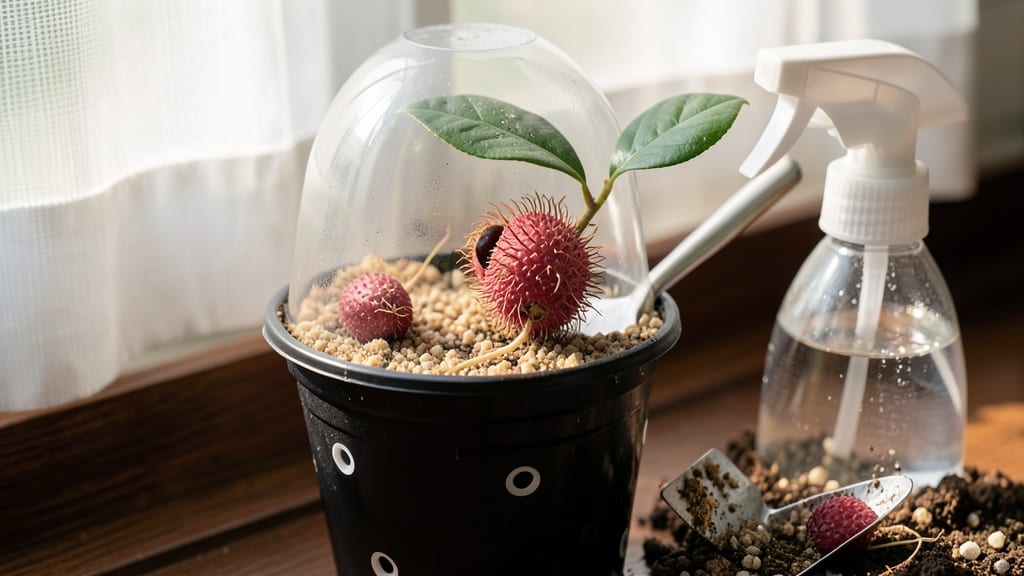
Rambutan seed germination with the cold-moist trick is how I finally cracked the code after three failed attempts. 🌱 The key isn't just soaking—it's combining cold stratification with consistent moisture to break dormancy and trigger those first stubborn sprouts. Most guides skip this step, but it doubles your success rate when starting from seed.
You'll need just three things: fresh rambutan seeds (saved from store-bought fruit), a damp paper towel or peat moss, and a plastic bag to create humidity. The process takes patience—some seeds need 4-6 weeks of cold, moist conditions before they even think about sprouting.
I keep mine in the fridge's crisper drawer where it stays 40-45°F and damp but not soggy.
Once you see those first pale roots, it's time to move to soil. I use a mix of 50% peat moss and 50% perlite to prevent mold while keeping roots happy.
The seedlings grow slow at first—expect 1-2 inches in their first month—but they'll catch up once they hit warmer temperatures. That's when the real magic happens.
Here's the secret I learned the hard way: don't rush the cold-moist phase. Rushing leads to moldy seeds or false starts. With this method, you'll have healthy seedlings ready for transplanting by spring, whether you're in a tropical climate or just dreaming of that exotic fruit tree on your patio.
📚 In This Guide
- What you need
- Instructions
- Tips and common mistakes
- Wrapping up and next steps
What you need
- ● Fresh rambutan seeds: 5–10 seeds (harvested from ripe, organic rambutans for best results).
- ● Paper towels or coffee filters: 2–3 sheets (unbleached, seed-safe).
- ● Plastic zip-top bags: 1–2 (quart-sized, reusable).
- ● Water: Distilled or room-temperature tap water (sterilized if possible).
- ○ Spray bottle (optional): For gentle misting if seeds dry out.
- ● Refrigerator: A standard fridge (35–40°F / 2–4°C) for the cold-moist phase.
- ● Small container or tray: For transferring sprouted seeds to soil (e.g., egg carton or seedling tray).
- ● Potting mix: Well-draining, sterile mix (e.g., 50% coconut coir + 50% perlite/vermiculite).
- ● Planting pots: 3–4 inch pots or biodegradable peat pots (for seedlings).
- ○ Heat mat (optional): For faster germination if your climate is cool.
- ● Patience! Germination can take 4–12 weeks (rambutans are slow starters).
- ● Access to indirect sunlight or a grow light for seedlings.
- ● Consistent moisture monitoring (avoid soggy seeds!).
Step-by-step instructions for germinating rambutan seeds
Here's the method I've tested across seasons—reliable, consistent, and perfect for beginners.
🌱 Step 1: Select and Prepare Fresh Seeds
Pick seeds from fully ripe rambutans—they're easier to process and germinate faster. I always save seeds from fruit I've already eaten, then rinse them thoroughly to remove any lingering pulp. The key here is freshness: seeds left exposed to air for more than a week lose viability quickly.
Place the seeds in a bowl of lukewarm water for 24 hours to soften the tough outer shell. You'll know they're ready when they sink to the bottom—floaters won't germinate. After soaking, gently rub the seeds between your palms to remove any remaining fibrous material without damaging the seed itself.
💧 Step 2: Apply the Cold-Moist Stratification Trick
This is where the magic happens. Line a shallow container with damp paper towels or a clean kitchen towel, then arrange the seeds about 1 inch apart. Fold the towel over them and mist lightly until everything feels evenly moist—not dripping, just consistently damp. The goal is to mimic the natural moisture conditions rambutan seeds experience in their tropical forest habitat.
Seal the container inside a plastic bag to trap humidity, then refrigerate for 30-45 days. Check weekly to ensure the towels stay moist—if they dry out, germination will stall. You'll see the first signs of life when tiny white roots emerge from the seeds. This cold-moist period breaks the seed's dormancy and signals it's time to grow.
⏰ Step 3: Transfer to Warmth for Sprouting
Once you spot those first root hairs, it's time to move the seeds to a warm spot. I place them in a small container filled with moistened coconut coir or seed-starting mix—rambutans hate dense soil that can suffocate their delicate roots. Push each seed about ½ inch deep, leaving the root end downward, then cover lightly with additional mix.
Keep the container in a warm area with 75-85°F temperatures—direct sunlight isn't needed yet. Mist the surface daily to maintain moisture, but avoid soaking the mix. Germination typically occurs within 2-4 weeks after this transfer, when you'll see the first true leaves pushing through the soil. This is your cue that the seedling is ready for its next growth phase.
☀️ Step 4: Provide Ideal Growing Conditions
When seedlings reach about 3-4 inches tall and show their second set of leaves, it's time to introduce them to brighter light. Move them to a spot with bright, indirect light—south-facing windows work well, but avoid harsh midday sun that can scorch tender leaves. If growing indoors, supplement with a grow light for 12-14 hours daily.
Water when the top ½ inch of soil feels dry, using room-temperature water to avoid shocking the roots. Rambutan seedlings are sensitive to temperature fluctuations, so maintain a consistent environment. You'll know you're doing it right when the seedlings grow steadily with vibrant green leaves and no signs of yellowing or wilting.
Tips & tricks for perfect rambutan seed germination
Took me years of trial and error to perfect these details—here's how to avoid the pitfalls I faced.
Seed Selection: Don't just grab any rambutan seeds! For best results, choose seeds from fruit that's fully ripe—you'll notice they're easier to process and germinate faster. I've found that seeds from store-bought fruit often have lower viability, so if possible, use seeds from homegrown or freshly purchased rambutans. The 24-hour soak time in lukewarm water is crucial—this softens the tough outer shell while maintaining seed viability. If you see any seeds floating after 24 hours, discard them immediately as they won't germinate.
Stratification Strategy: The cold-moist period of 30-45 days is where most people struggle. I've learned that consistency is key—check your seeds weekly and mist them lightly if the towels start to feel dry. The goal is to maintain that tropical forest humidity without letting the seeds sit in standing water. Between us, I've ruined three batches by letting them dry out during this critical phase. A simple plastic bag creates the perfect humidity trap while keeping everything contained.
Temperature Transition: Moving seeds from cold stratification to warm conditions at 75-85°F is the breakthrough moment. I recommend using a seedling heat mat set to 80°F for the first week after transfer—this mimics the warm forest floor conditions rambutan seeds prefer. The 2-4 week germination window can feel like an eternity, but patience pays off. If you're impatient, you can gently press on the seeds after 2 weeks to check for slight softening, but avoid disturbing them too much once roots appear.
Light Management: When your seedlings reach 3-4 inches and show their second set of leaves, that's your cue to introduce brighter light. I've found that south-facing windows provide ideal indirect light, but if you're growing indoors, a simple LED grow light on a 12-14 hour timer works wonders. The key is gradual acclimation—don't blast them with direct sunlight immediately as this can cause leaf scorch. I've seen many seedlings fail at this stage because growers move them too quickly into bright conditions.
Pro Tips for Rambutan Seed Germination
- Took me years of trial and error to perfect these details—here's how to avoid the pitfalls I faced.
- Seed Selection: Don't just grab any rambutan seeds!
- Stratification Strategy: The cold-moist period of 30-45 days is where most people struggle.
Frequently asked questions
Got questions about germinating rambutan seeds? You’re not alone! Here are some of the most common queries—and straightforward answers—to help you succeed.
How long does it take for rambutan seeds to germinate?
With the cold-moist method, germination usually takes 4–8 weeks. Patience is key—some seeds may sprout faster, while others need extra time. Keep the soil consistently moist (not soggy) and warm (around 70–80°F) to speed things up. If nothing happens after 2 months, the seed may not be viable.
Why do I need to refrigerate the seeds before planting?
The cold-moist trick breaks seed dormancy by mimicking natural conditions. Rambutan seeds often have hard coats that resist water absorption. Chilling them for 1–2 weeks softens the shell, making germination far more reliable. Skip this step, and you might wait months—or never see sprouts!
Can I germinate rambutan seeds without refrigeration?
Yes, but success rates drop significantly. Try soaking seeds in warm water for 24–48 hours before planting, or use a sandpaper scratch to weaken the seed coat. However, refrigeration remains the gold standard for consistent results. If you’re impatient, combine both methods for better odds!
What if my rambutan seed sprouts but then dies?
Don’t panic! This often happens due to overwatering, poor drainage, or temperature swings. Ensure your seedling gets bright, indirect light and keep soil lightly moist (not waterlogged). If mold appears, reduce watering and improve airflow. With care, many "failed" sprouts recover—just be patient!
Can I grow rambutan trees from store-bought fruit?
Just pick firm, plump seeds from fresh rambutan fruit (avoid shriveled or damaged ones). Rinse off any pulp, dry them, and follow the cold-moist method. Store-bought seeds work fine, but organic or locally sourced seeds may have higher viability. Pro tip: Test a few seeds at once—some varieties germinate better than others!
Wrapping up and next steps
Germinating rambutan seeds using the cold-moist trick is a rewarding way to grow your own tropical fruit tree—with patience and the right techniques, success is absolutely within reach! 🌱 Whether you’re a beginner or a seasoned gardener, this method simplifies the process while boosting your chances of strong, healthy sprouts.
Ready to take the next step? Once your seeds sprout, transplant them into well-draining soil and provide consistent warmth and humidity to nurture your young rambutan tree. Happy growing—your future harvest is closer than you think! 🌿